
Egyptian Pharaohs & Queens
Click on the image to enlarge.
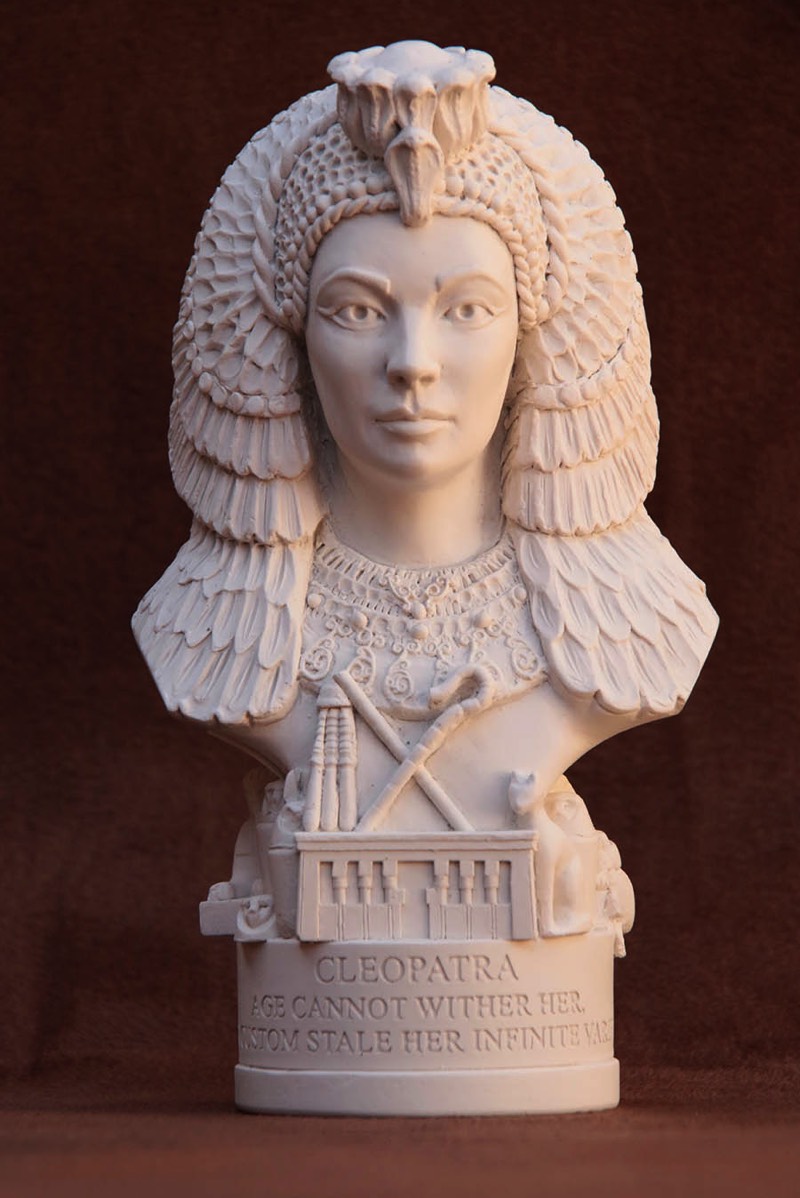
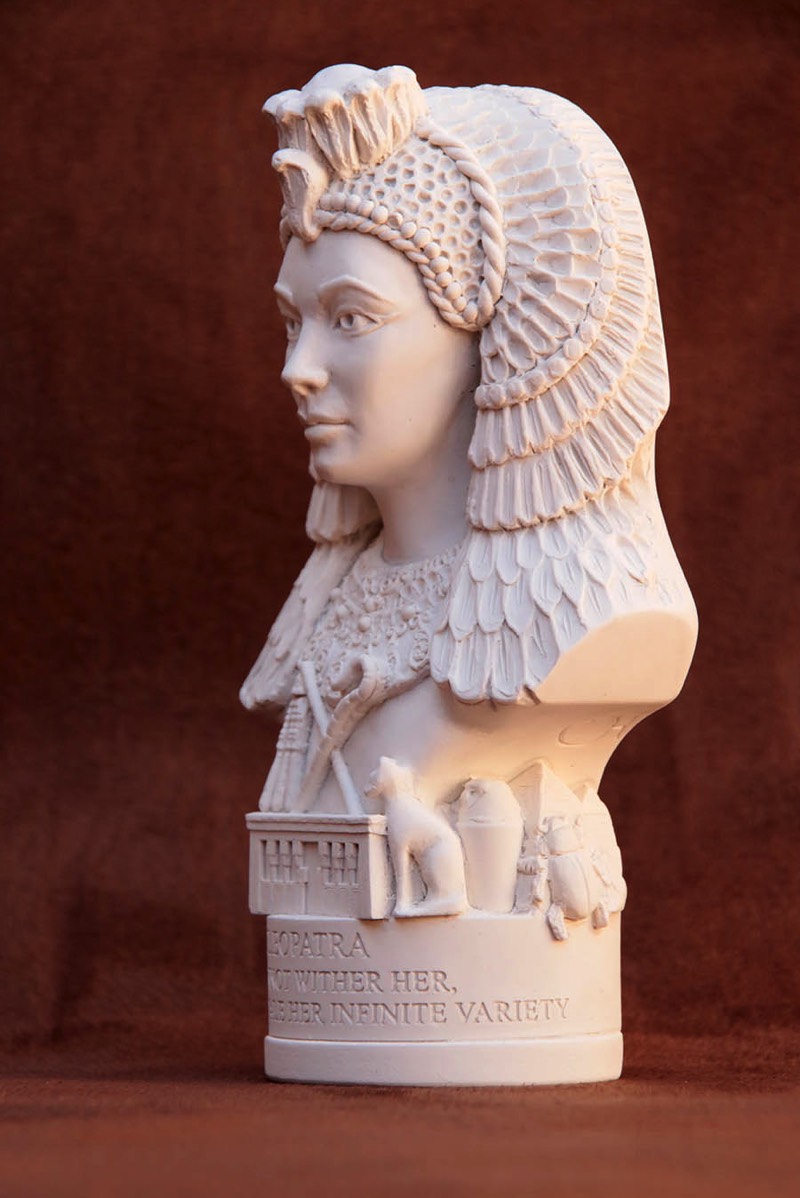
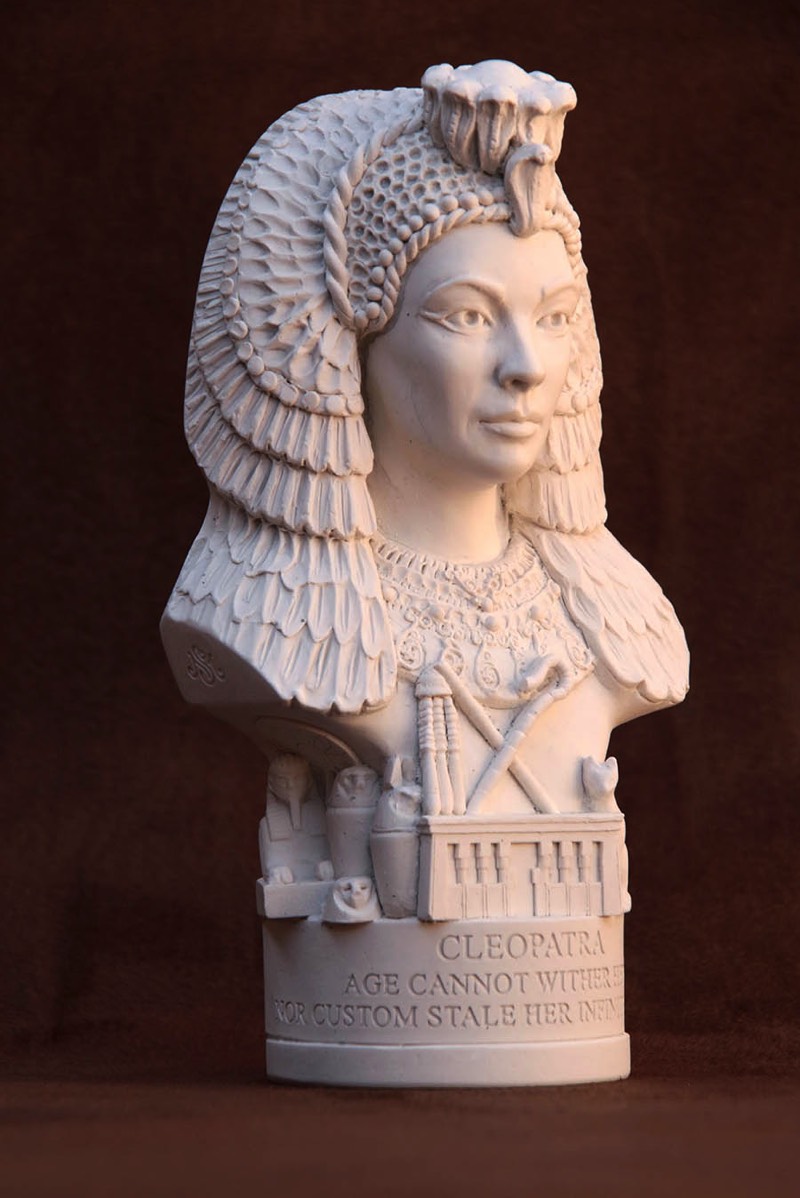
Cleopatra
51 - 30 BC
Cleopatra ruled Egypt from 51 to 30 BC as Egypt’s last pharaoh.
More Info
She was renowned for her beauty, intelligence and political astuteness and remembered for her passionate affairs with Julius Caesar and Mark Antony.
The etch around the base reads:
"AGE CANNOT WITHER HER, NOT CUSTOM STALE HER INFINiTE VARIETY"
Height: 130mm
Width: 70mm
Depth: 35mm
The etch around the base reads:
"AGE CANNOT WITHER HER, NOT CUSTOM STALE HER INFINiTE VARIETY"
Height: 130mm
Width: 70mm
Depth: 35mm
Click on the image to enlarge.
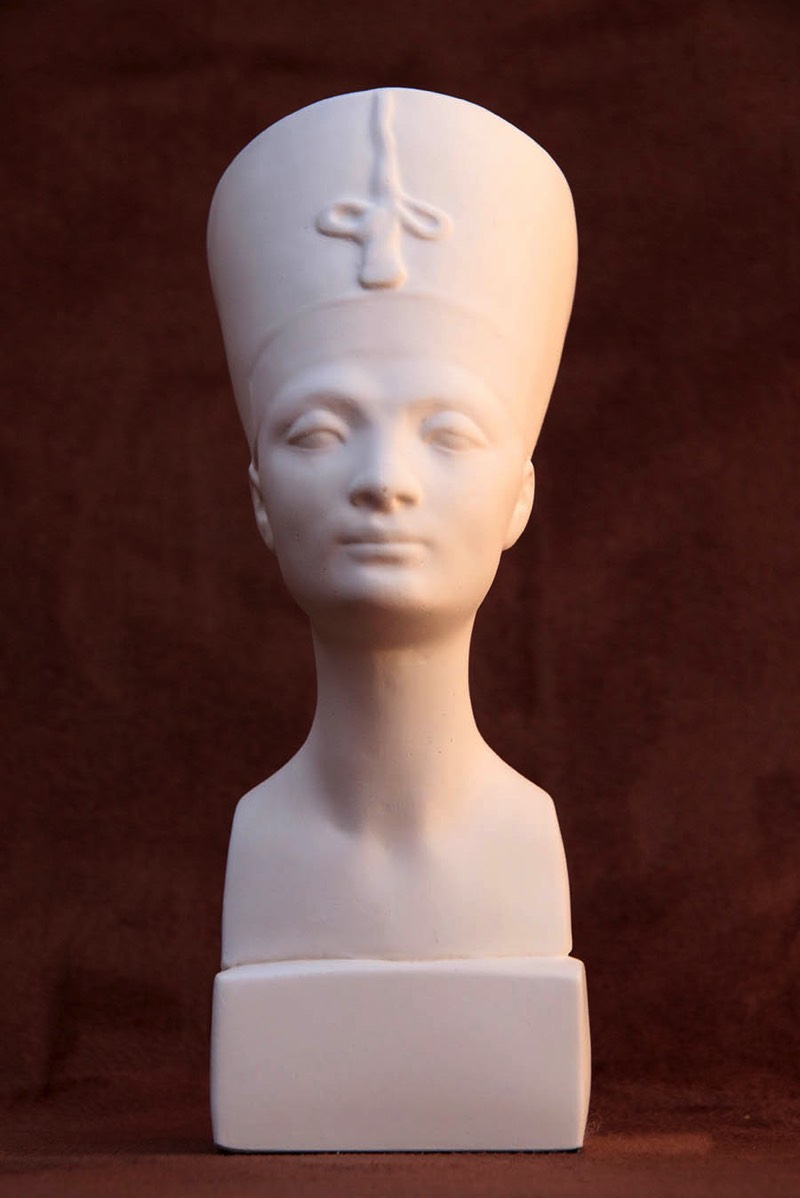
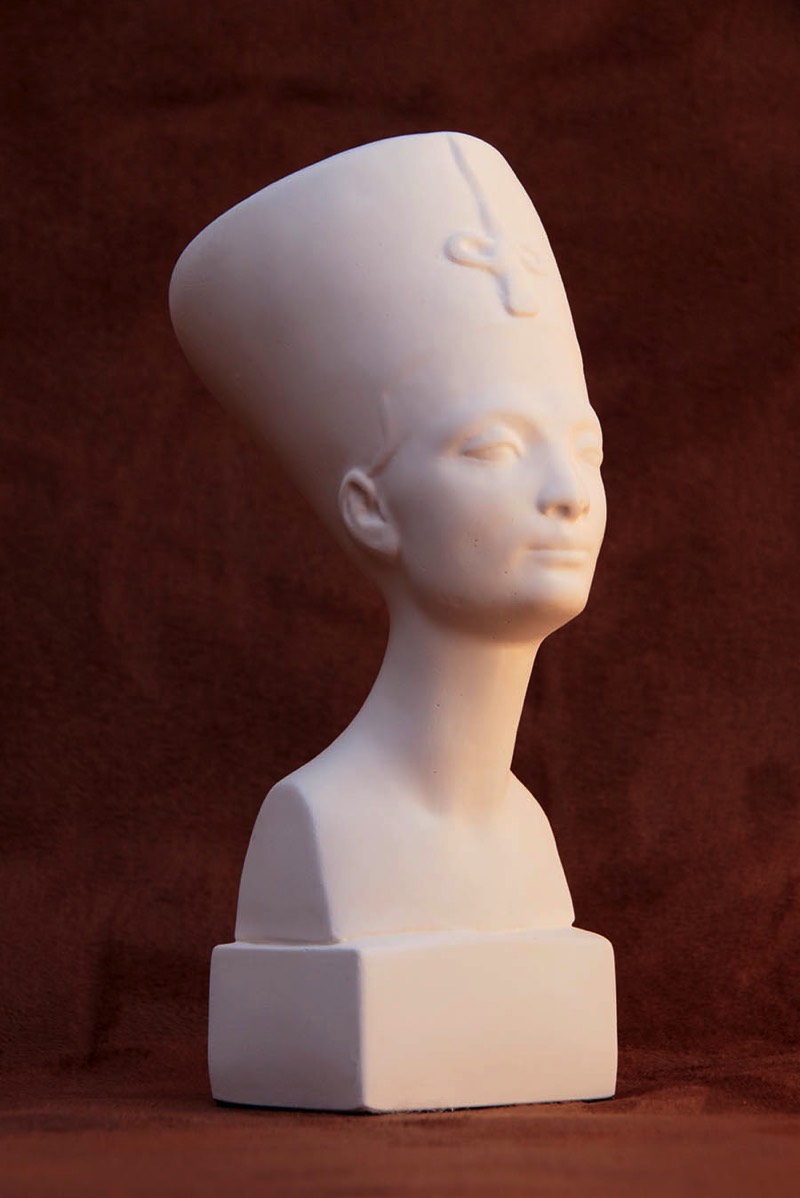
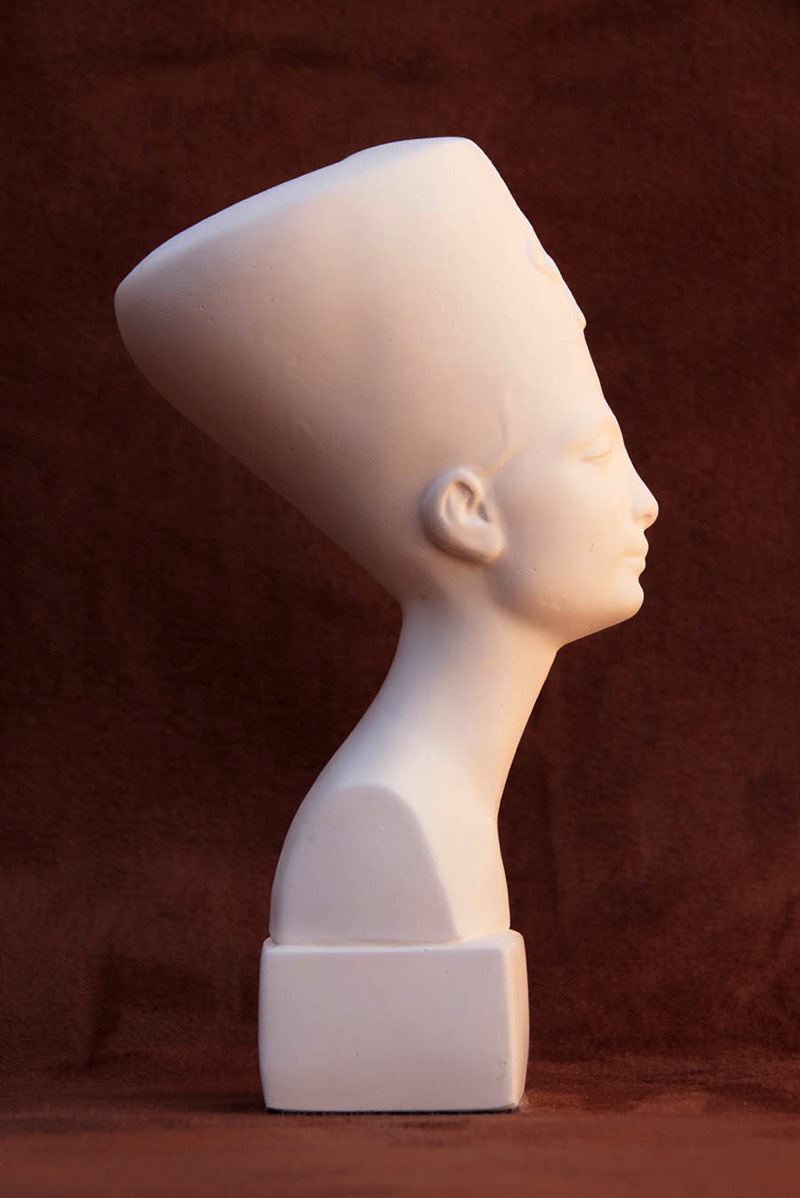
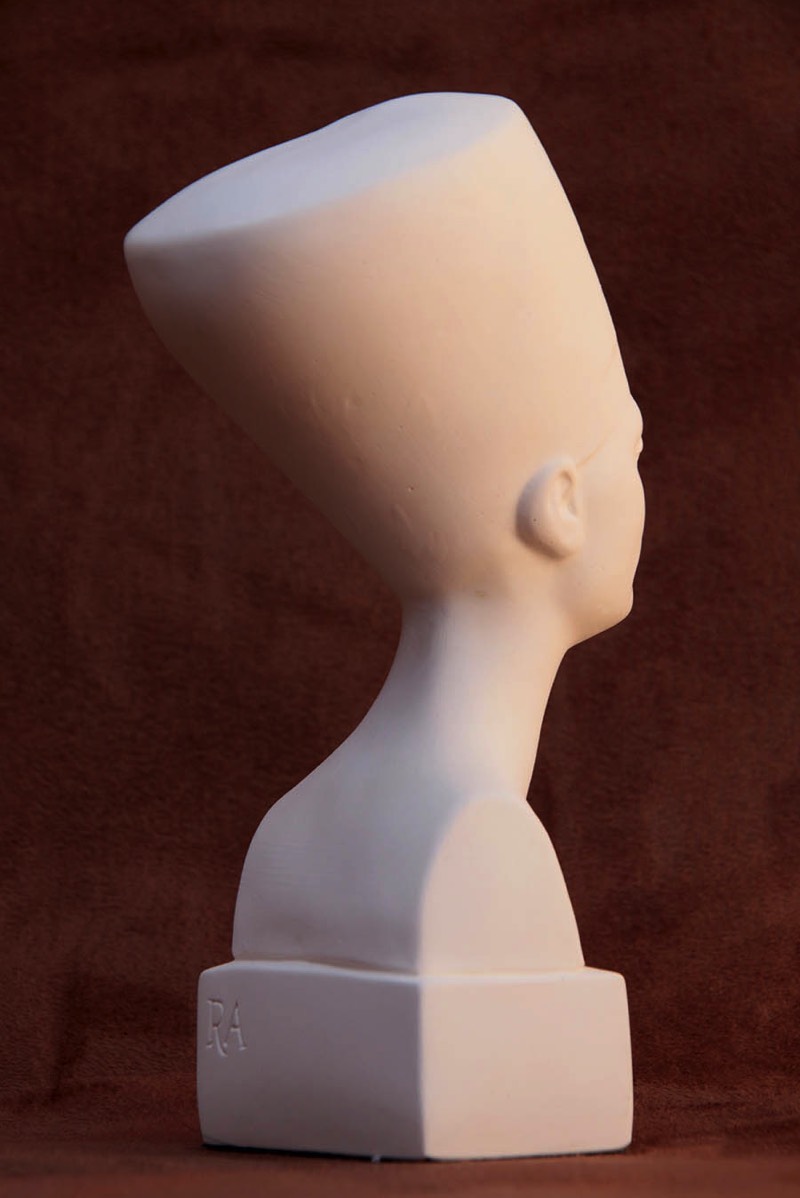
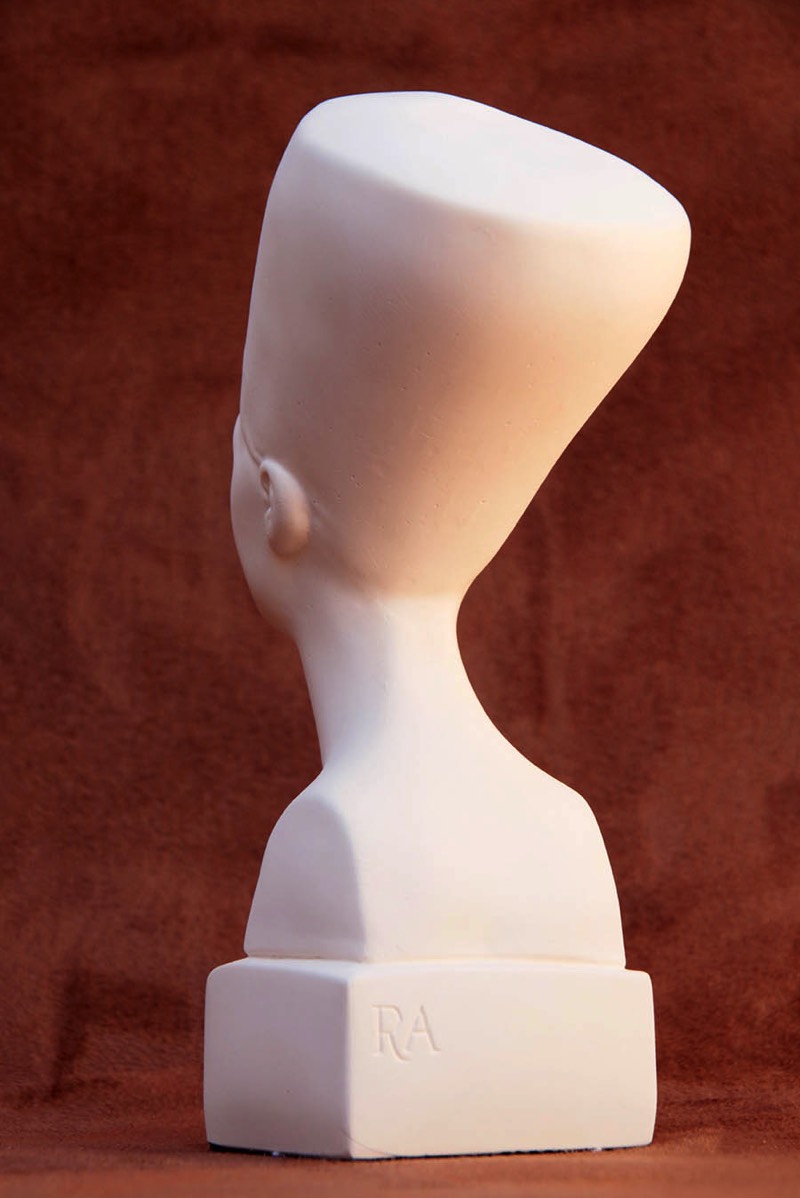
Nefertiti Queen of Egypt
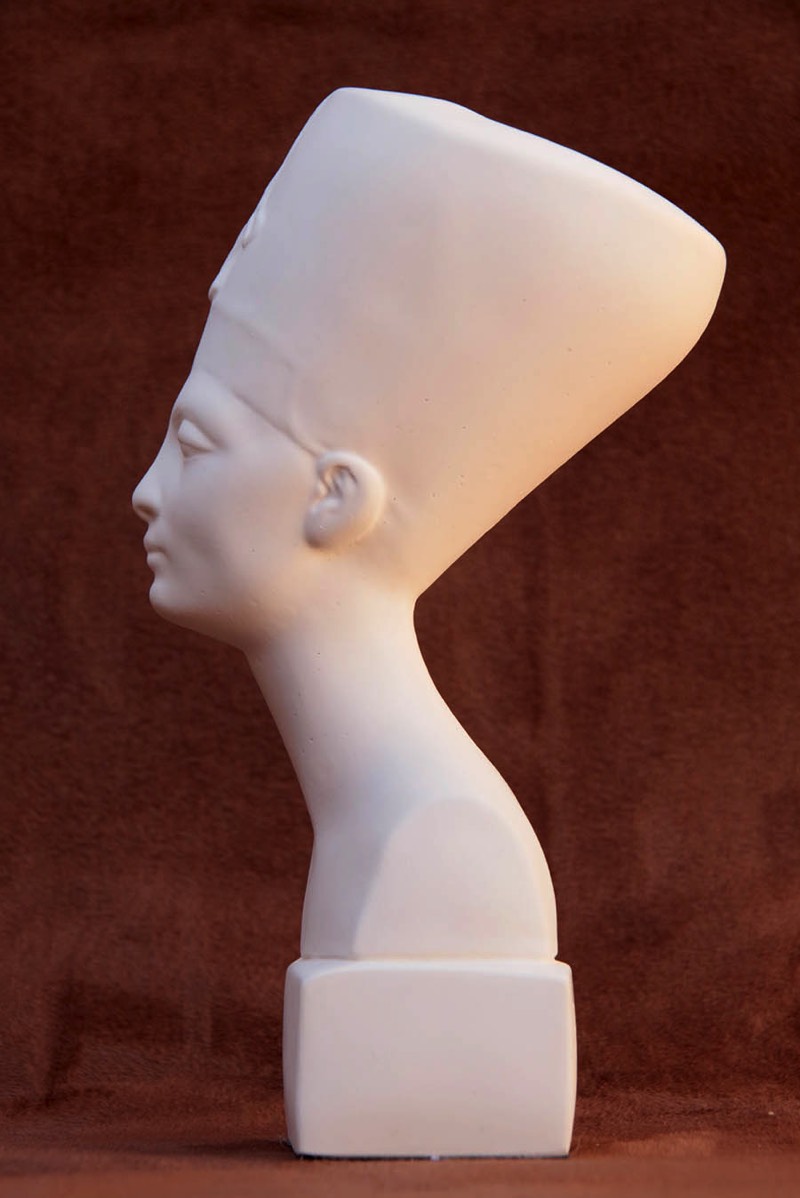
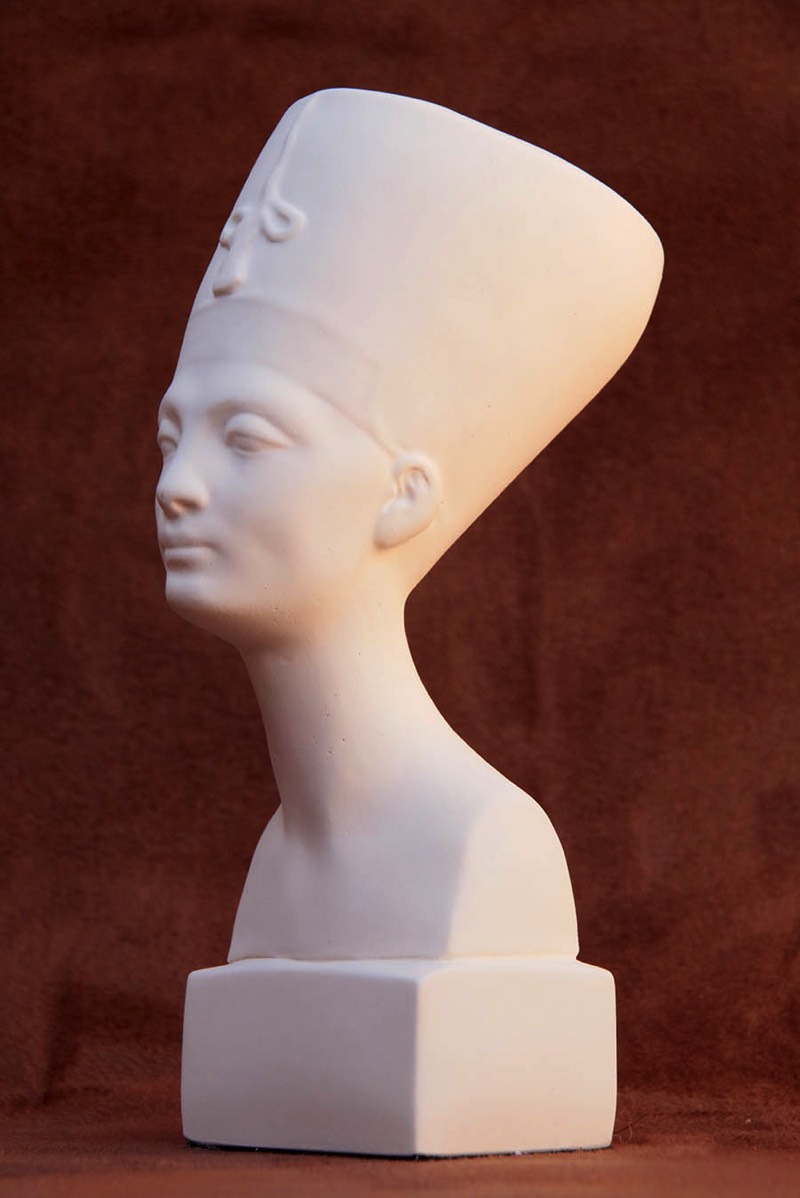
This is a copy of the famous bust of Nefertiti
More Info
that can be seen in the Egyptian Museum in Berlin. This piece is made from British gypsum plaster, whereas the original is made from limestone and stucco and is beautifully painted.
Height: 160mm
Width: 60mm
Depth: 100mm
Height: 160mm
Width: 60mm
Depth: 100mm
Click on the image to enlarge.
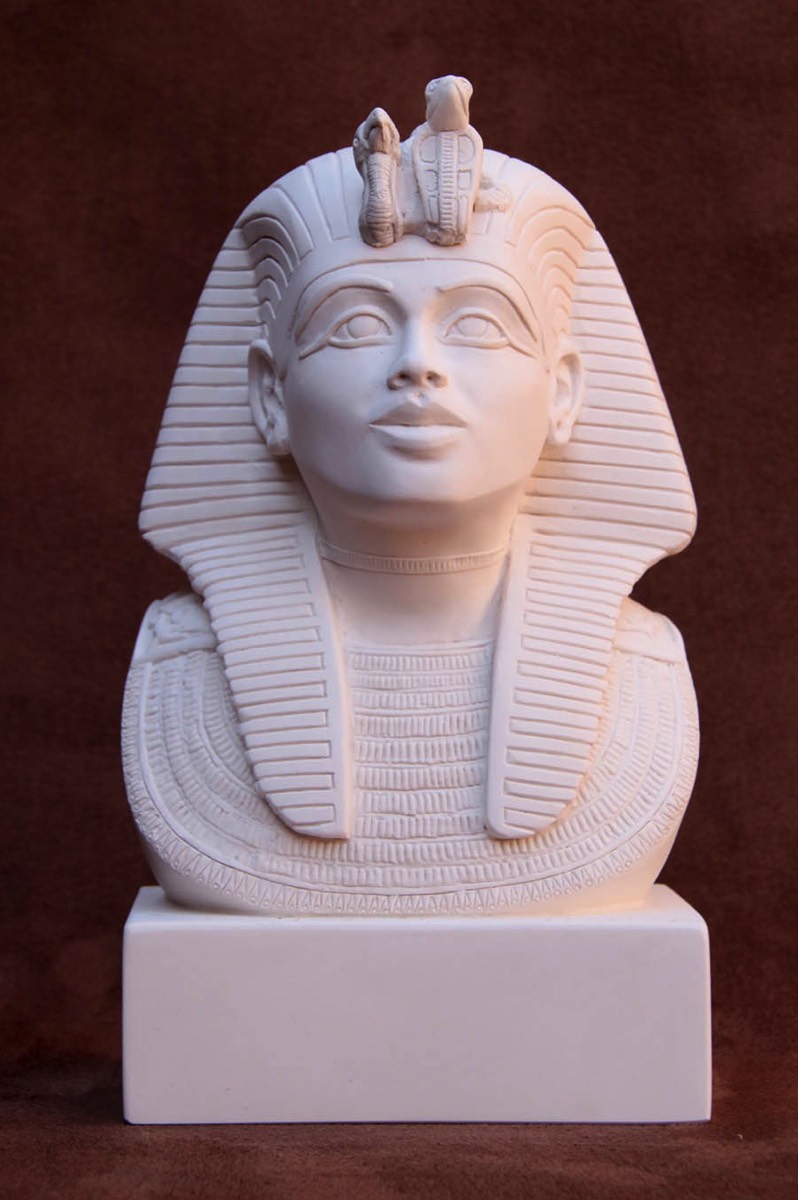
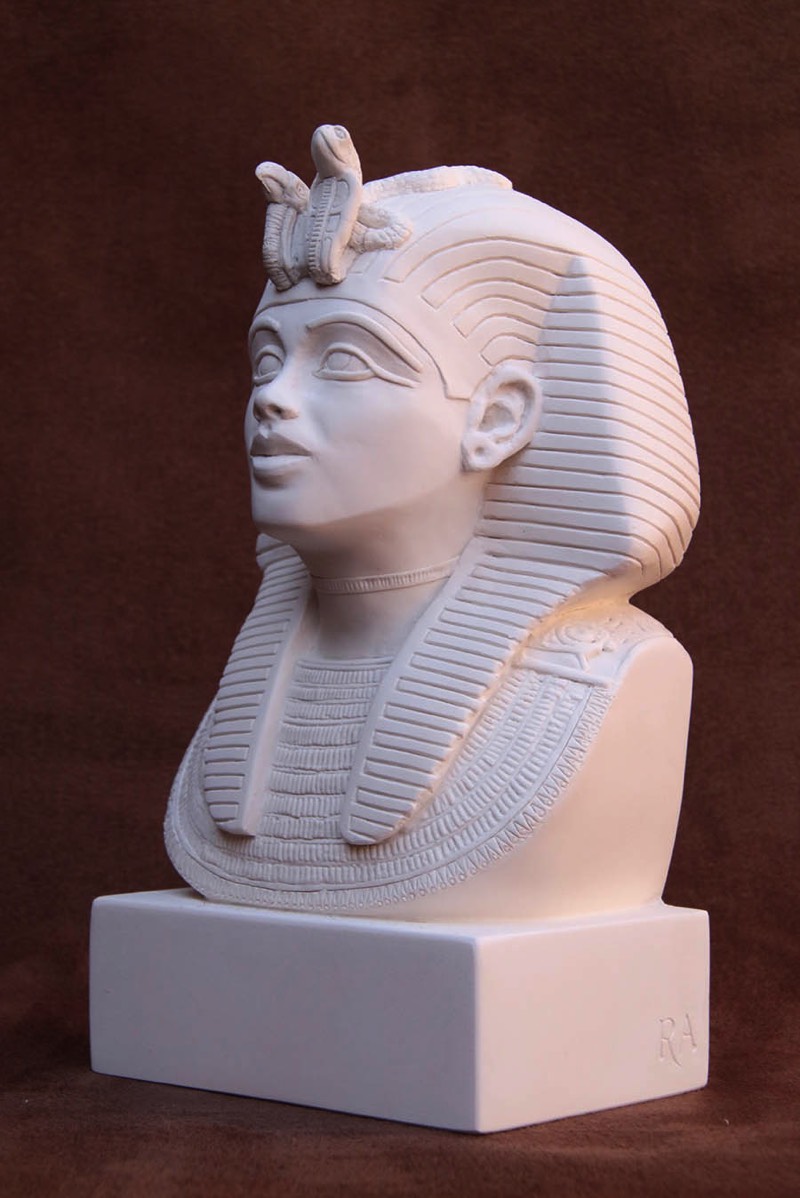
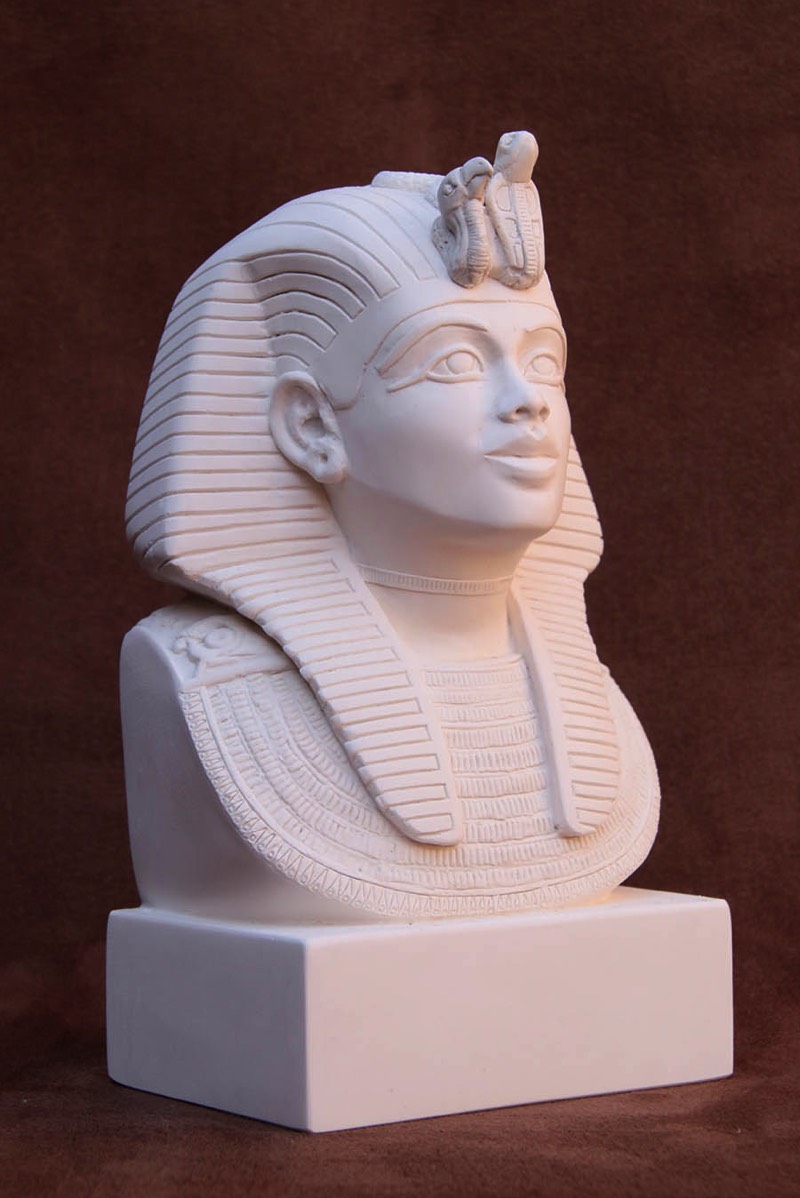
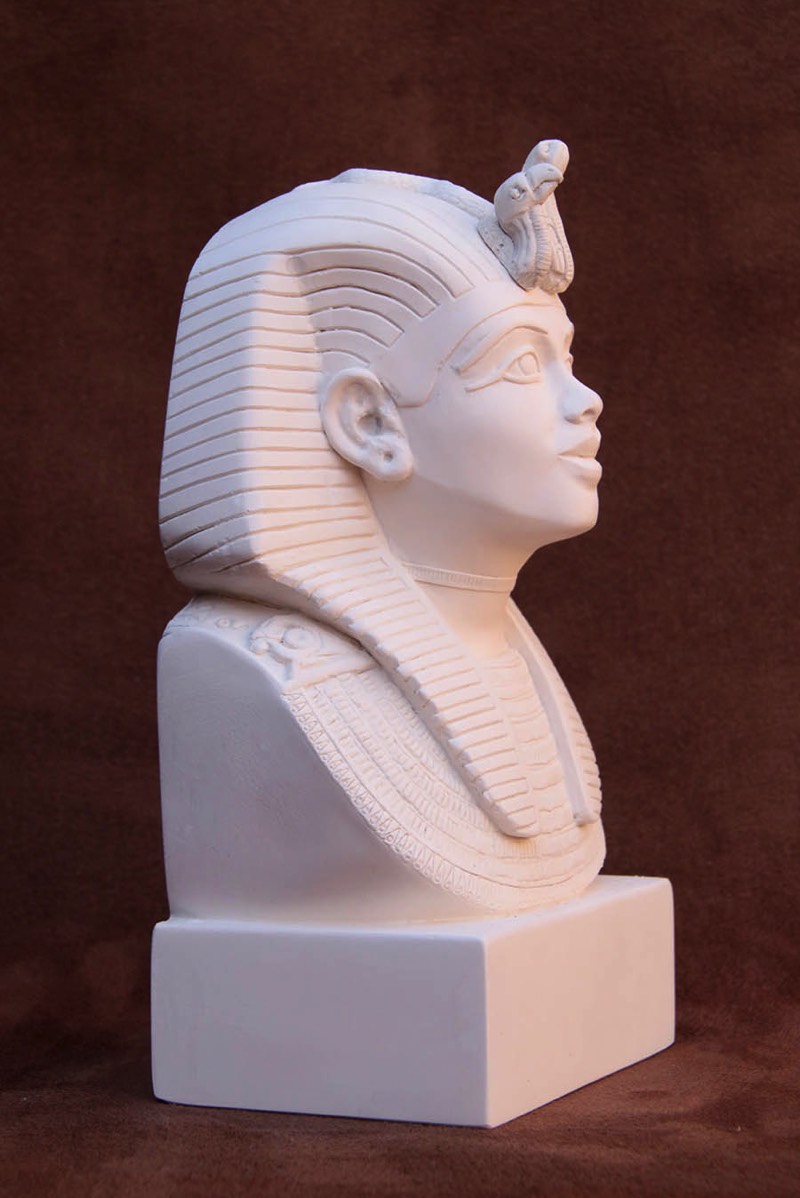
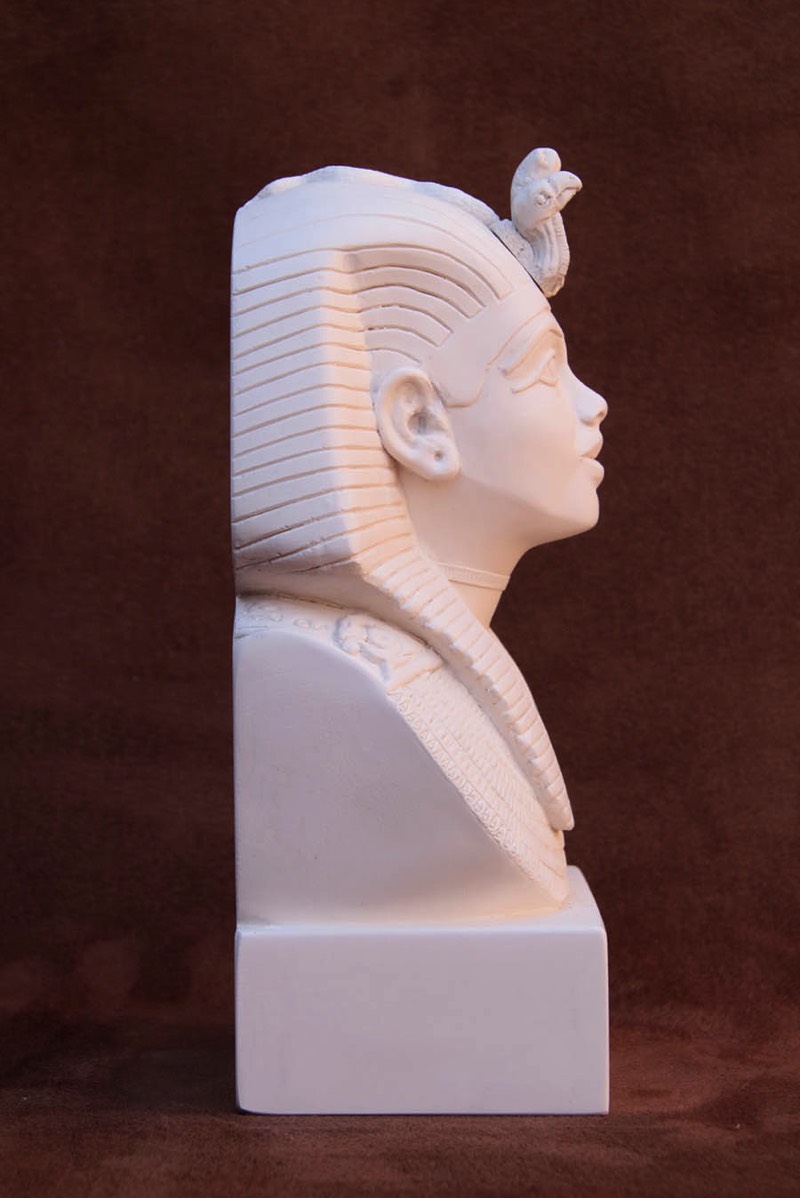
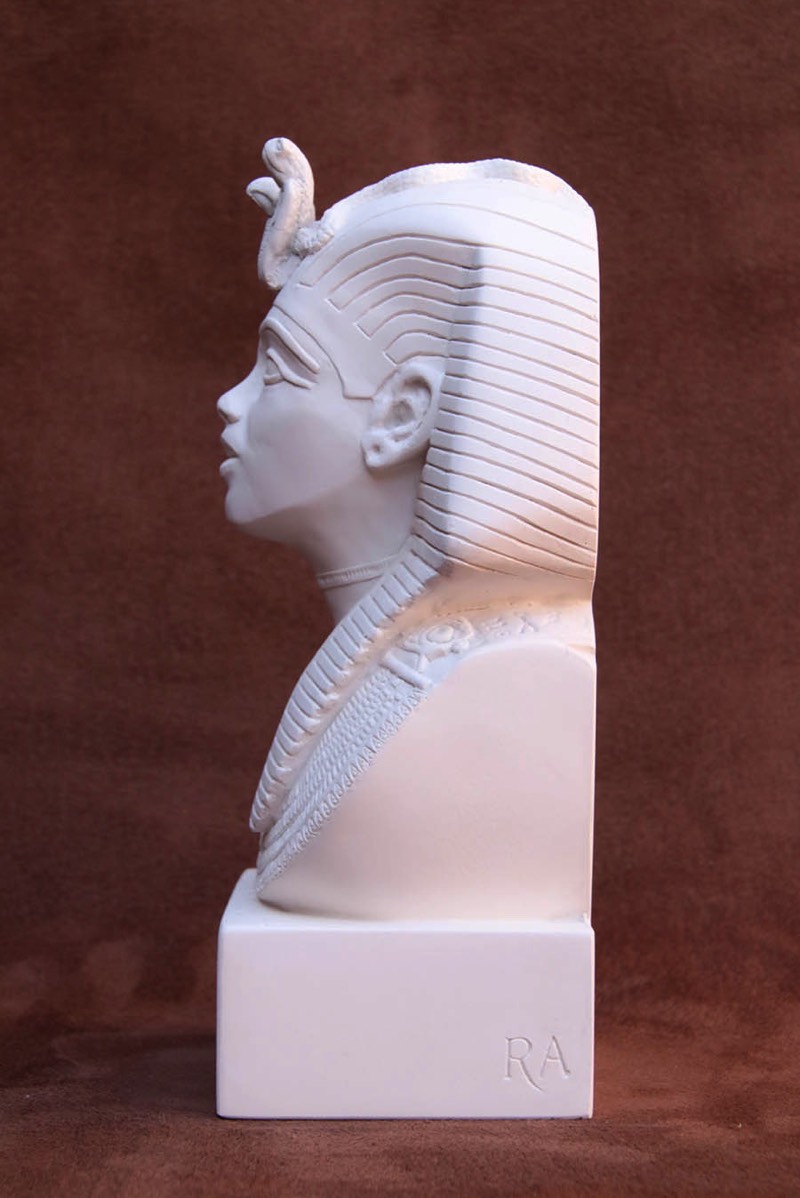
Mask of Tutankhamun
(Ornament or Bookend Single)
The 1922 discovery by Howard Carter and George Herbert, 5th Earl of Carnarvon of Tutankhamun's virtually intact tomb received worldwide press coverage.
More Info
It sparked a renewed public interest in Ancient Egypt, for which Tutankhamun's burial mask remains the popular symbol.
Tutankhamun's tomb was the only burial chamber to be discovered dating from Egypt’s New Kingdom (c1550–1069 BC) to have been found substantially intact.
The contents provided an unequalled insight into royal funerary practices, art and craftsmanship of the period.
Height: 180mm
Width: 100mm
Depth: 70mm
Tutankhamun's tomb was the only burial chamber to be discovered dating from Egypt’s New Kingdom (c1550–1069 BC) to have been found substantially intact.
The contents provided an unequalled insight into royal funerary practices, art and craftsmanship of the period.
Height: 180mm
Width: 100mm
Depth: 70mm
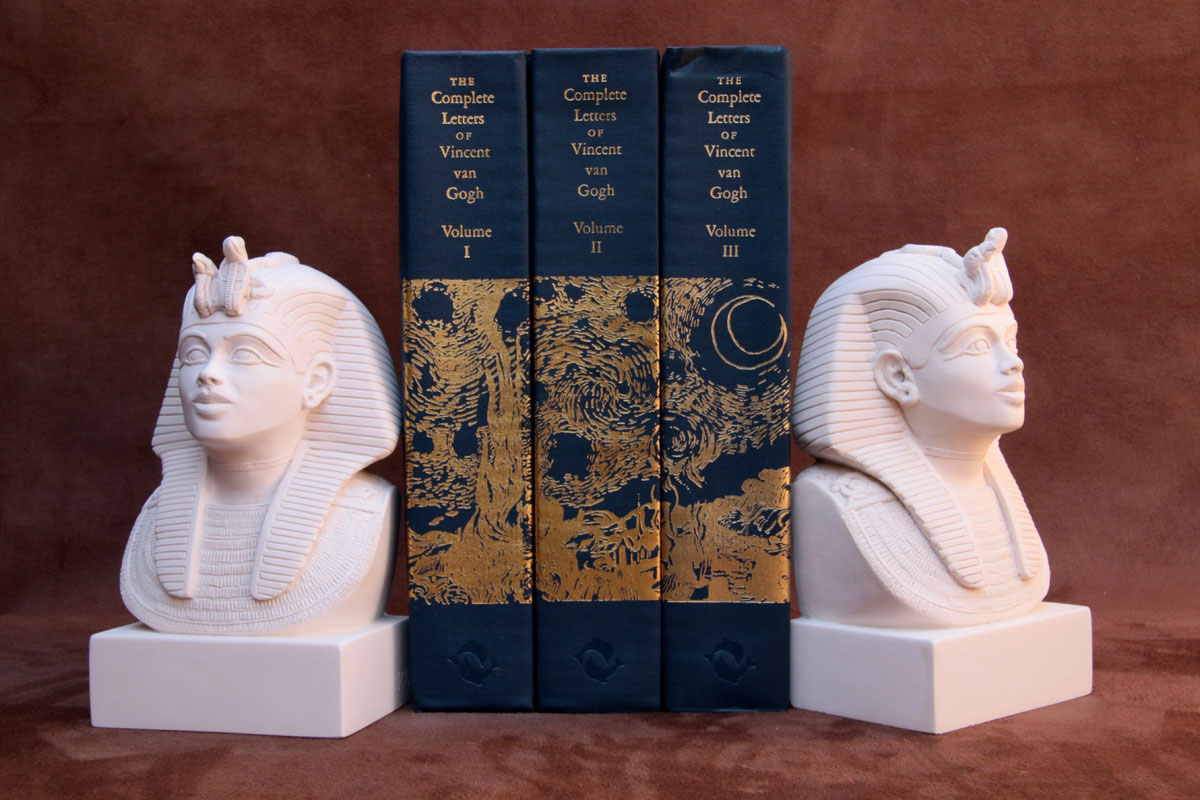
Click on the image to enlarge.
Mask of Tutankhamun
Bookends (Set of 2)
The 1922 discovery by Howard Carter and George Herbert, 5th Earl of Carnarvon of Tutankhamun's virtually intact tomb received worldwide press coverage.
Bookends (Set of 2)
The 1922 discovery by Howard Carter and George Herbert, 5th Earl of Carnarvon of Tutankhamun's virtually intact tomb received worldwide press coverage.
More Info
It sparked a renewed public interest in Ancient Egypt, for which Tutankhamun's burial mask remains the popular symbol.
Tutankhamun's tomb was the only burial chamber to be discovered dating from Egypt’s New Kingdom (c1550–1069 BC) to have been found substantially intact.
The contents provided an unequalled insight into royal funerary practices, art and craftsmanship of the period.
Dimensions each:
Height: 180mm
Width: 100mm
Depth: 70mm
Tutankhamun's tomb was the only burial chamber to be discovered dating from Egypt’s New Kingdom (c1550–1069 BC) to have been found substantially intact.
The contents provided an unequalled insight into royal funerary practices, art and craftsmanship of the period.
Dimensions each:
Height: 180mm
Width: 100mm
Depth: 70mm
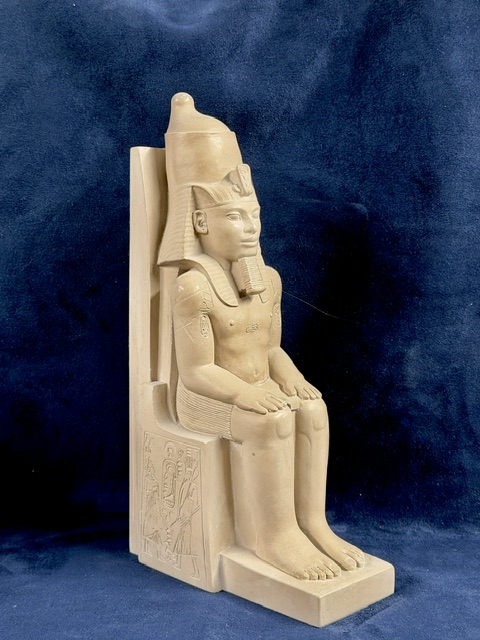
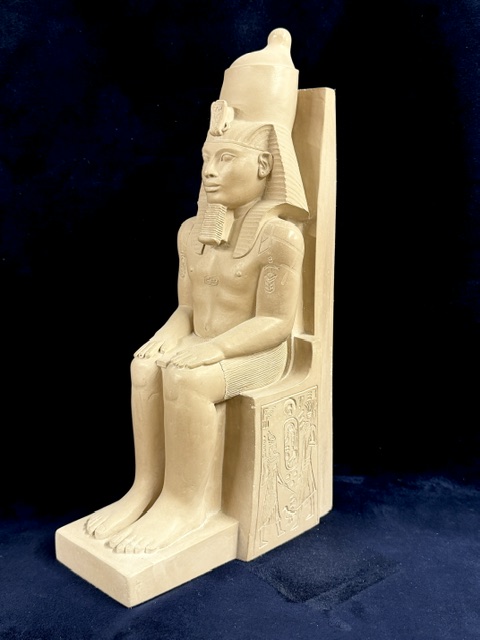
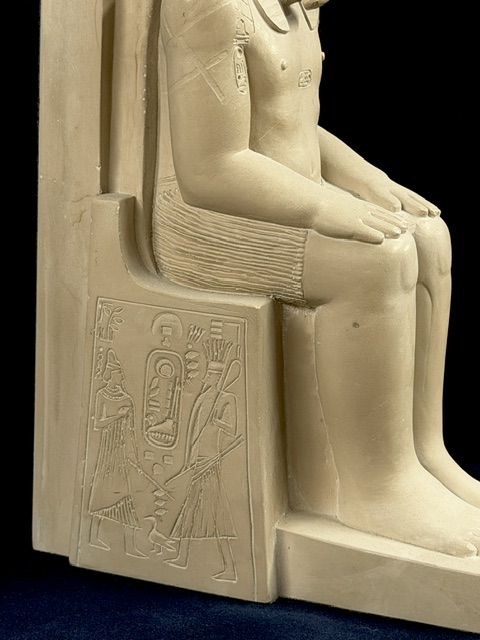
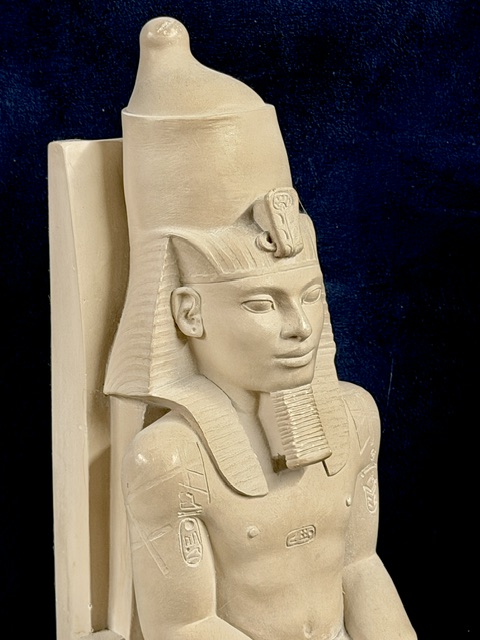
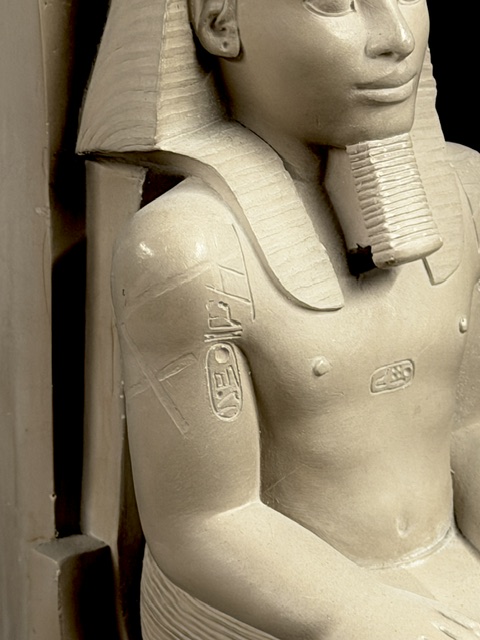
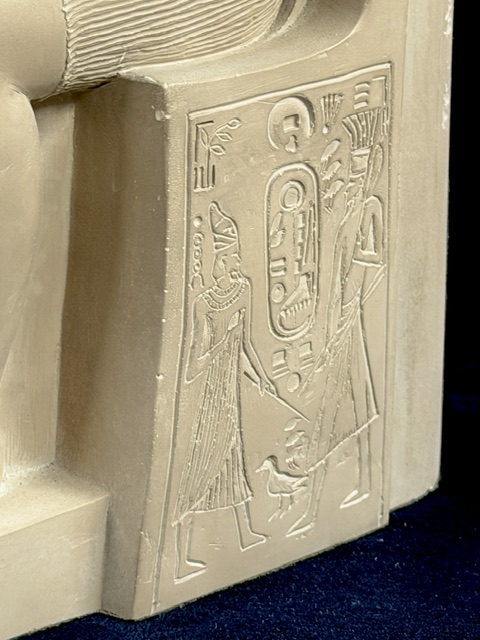
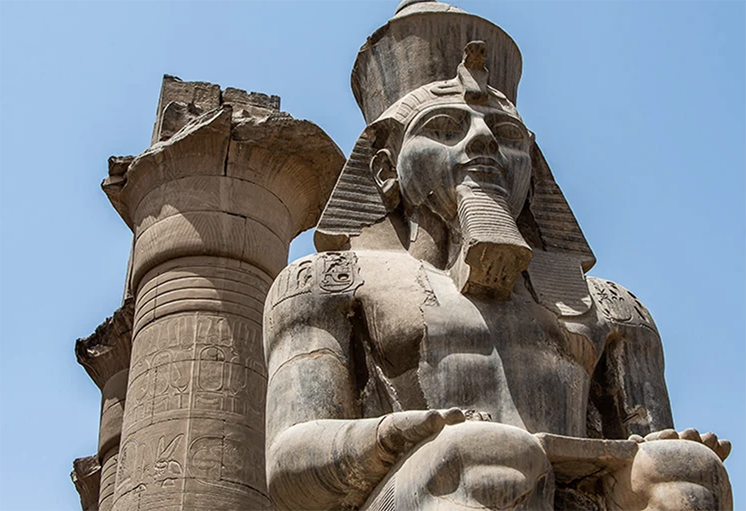
Rameses II the Great (Bookend Single)
Was the third Egyptian Pharaoh (reigned 1279 BC – 1213 BC) of the Nineteenth dynasty.
More Info
He is often regarded as the greatest, most celebrated, and most powerful Pharaoh of the Egyptian Empire and successors and later Egyptians called him the "Great Ancestor." Rameses was aged 25 when he ascended the throne and ruled Egypt for 67 years.
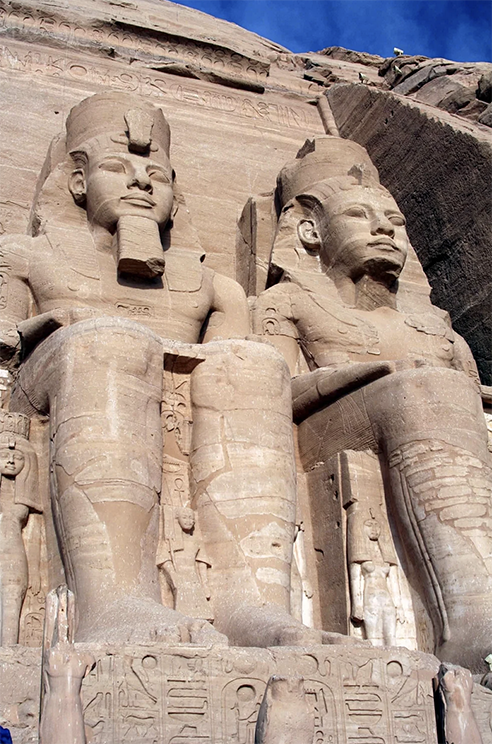
When in his thirtieth year of ruling he was promoted to a living god, Rameses wanted the buildings to reflect his status. Among the most notable structures he created are those at the Great Temple of Abu Simbel, where Rameses sits next to his fellow gods Amun, Ra-Horakhty, and Ptah.
This exquisite sculpture is a replica of the seated Rameses statue which was at the door of the Temple. The original statue is located in the ancient Wawat (or the legendary Ybsambul) in Nubia, near the borders of Sudan.
The sculpture shows an idealised image of Rameses as a young man, with high cheek-bones and smooth skin. His eyebrows arch gently over wide, almond-shaped eyes. His nose is straight and well- defined and his full lips are set in a serene smile. Jutting below his chin is the rectangular false beard traditionally worn by royalty.
Rameses also wears the nemes or royal head-dress. The stone head-dress of the statue is surmounted by a diadem or headband in the shape of a uraeus - a rearing cobra and on top of his head Rameses wears a modus crown.
Height: 320mm
Width: 95mm
Depth: 140mm
When in his thirtieth year of ruling he was promoted to a living god, Rameses wanted the buildings to reflect his status. Among the most notable structures he created are those at the Great Temple of Abu Simbel, where Rameses sits next to his fellow gods Amun, Ra-Horakhty, and Ptah.
This exquisite sculpture is a replica of the seated Rameses statue which was at the door of the Temple. The original statue is located in the ancient Wawat (or the legendary Ybsambul) in Nubia, near the borders of Sudan.
The sculpture shows an idealised image of Rameses as a young man, with high cheek-bones and smooth skin. His eyebrows arch gently over wide, almond-shaped eyes. His nose is straight and well- defined and his full lips are set in a serene smile. Jutting below his chin is the rectangular false beard traditionally worn by royalty.
Rameses also wears the nemes or royal head-dress. The stone head-dress of the statue is surmounted by a diadem or headband in the shape of a uraeus - a rearing cobra and on top of his head Rameses wears a modus crown.
Height: 320mm
Width: 95mm
Depth: 140mm
Egyptian Animal Deities
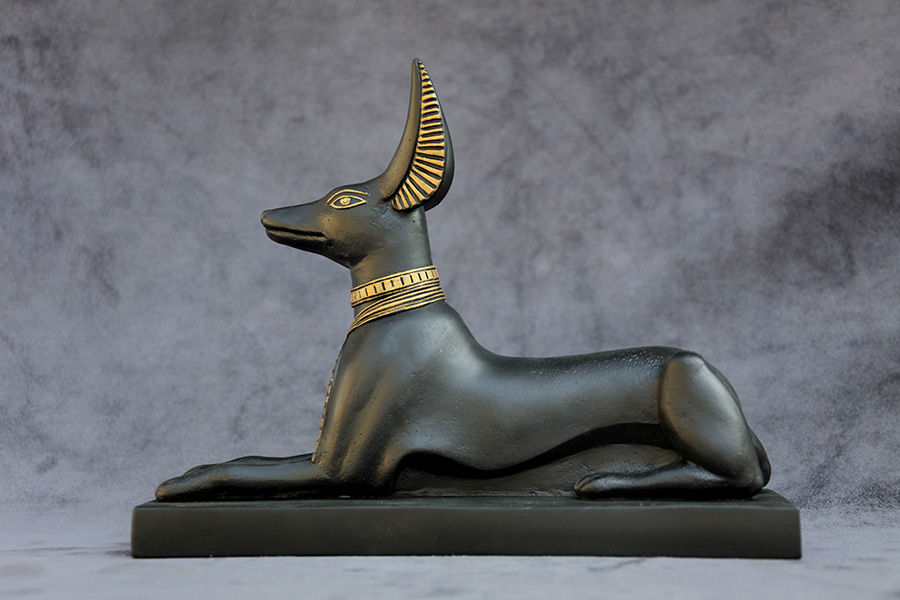
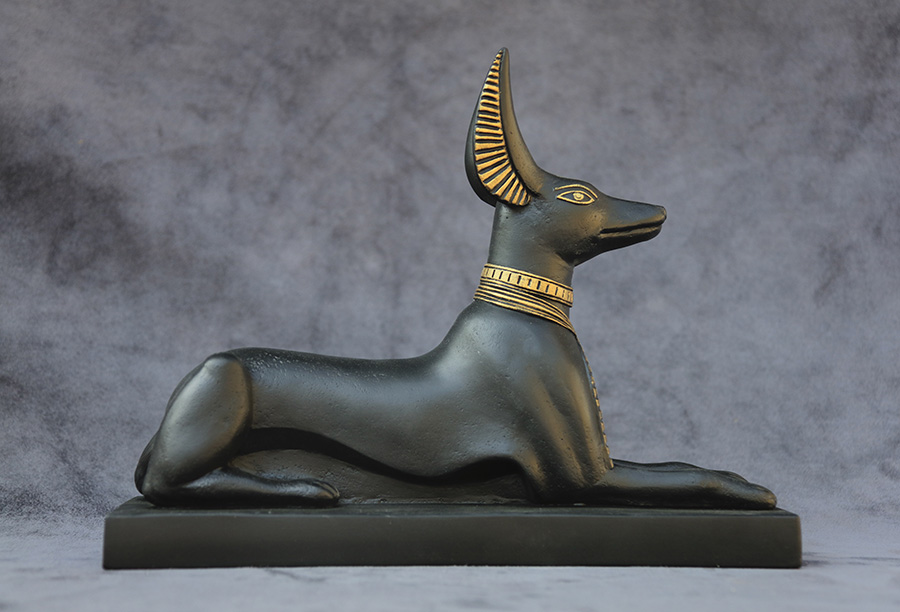
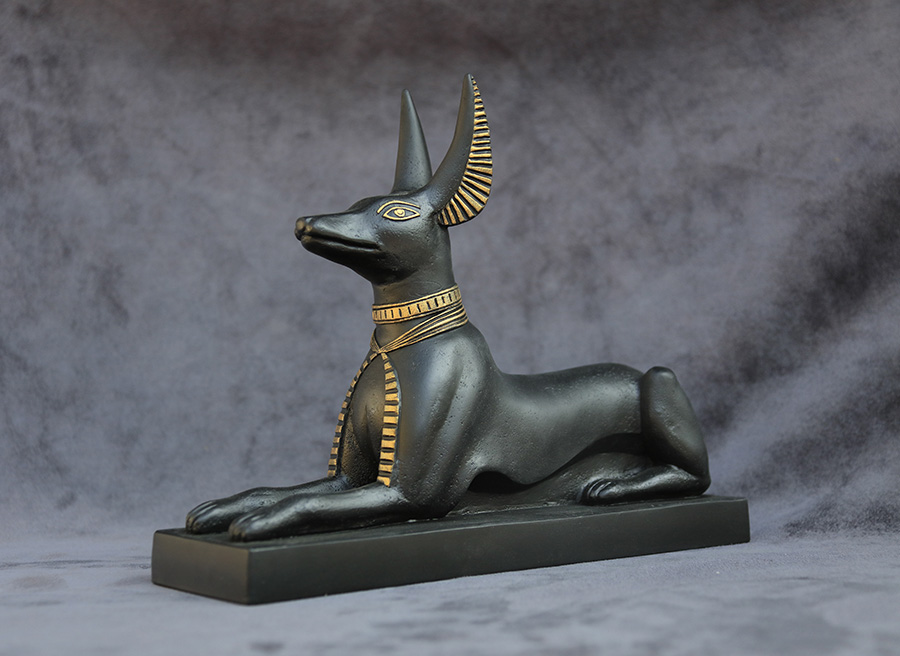
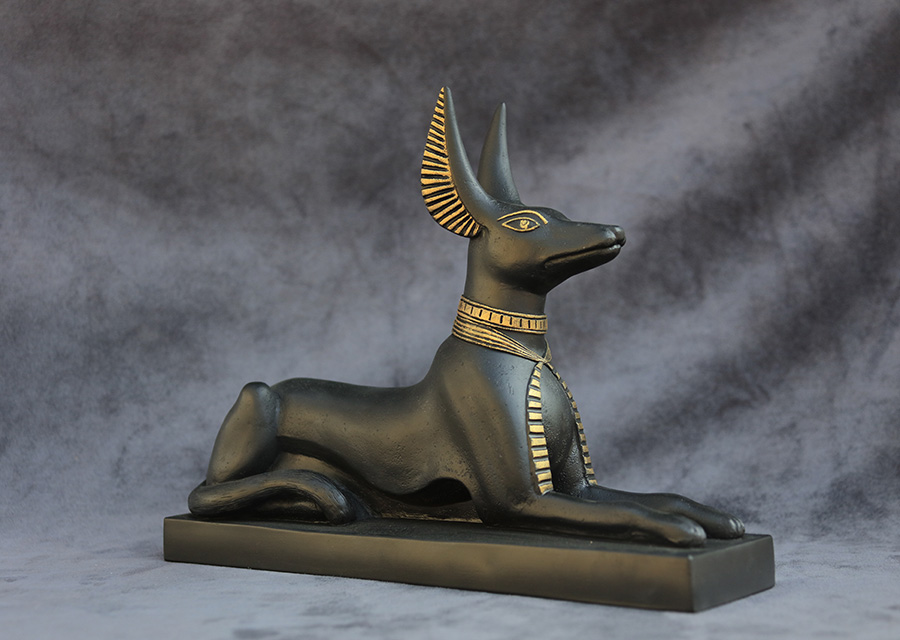
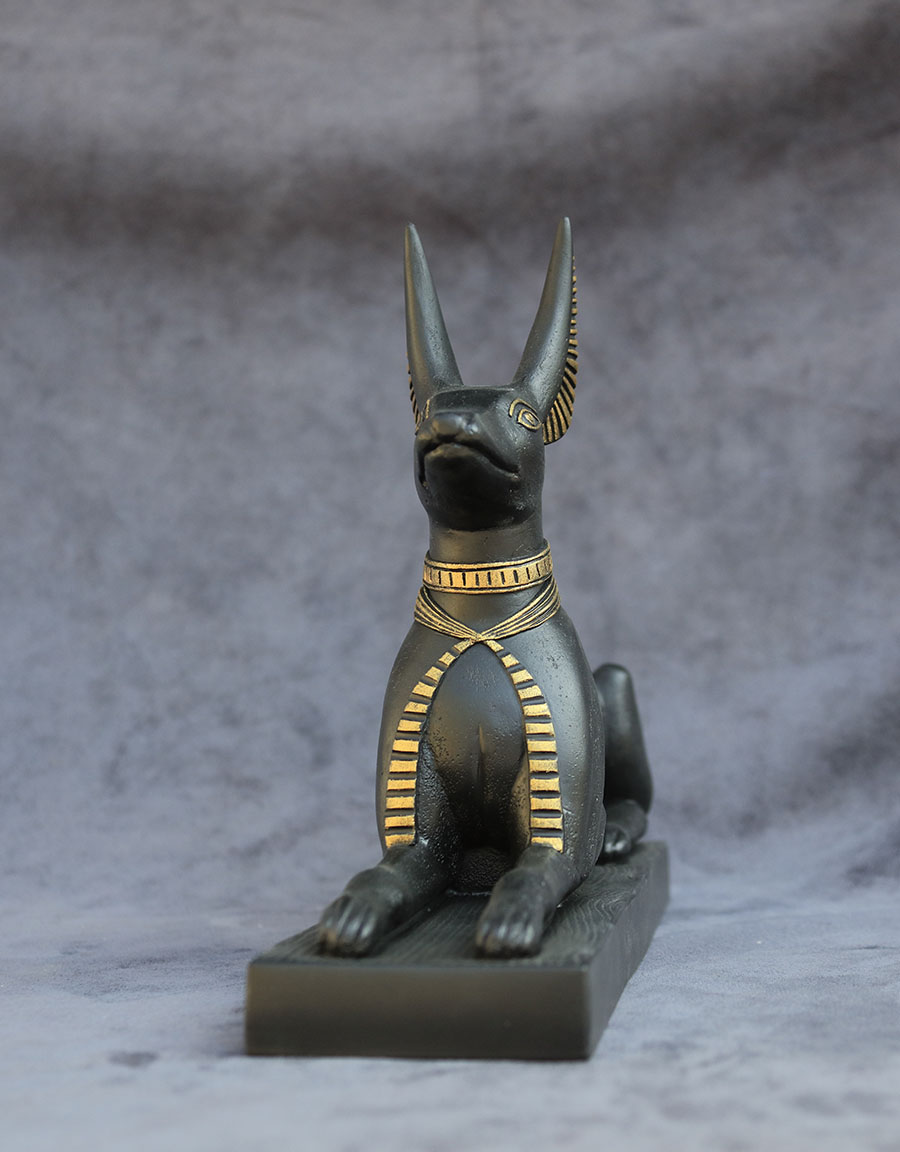
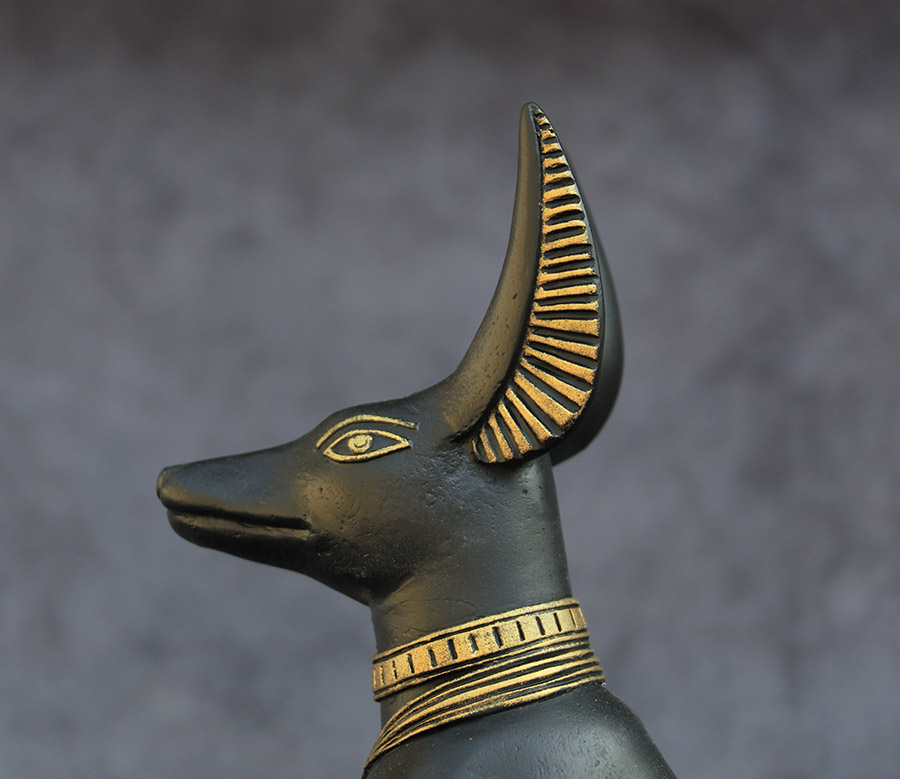
Anubis (Black with Gold)
Guardian of the underworld, was the original Ancient Egyptian God of the dead (a role later associated with Osiris), and is usually portrayed as a man with the head of a jackal. This sculpture is based on the one found in the tomb of Tutankhamun, and is unusual in that it depicts Anubis as a full jackal.
More Info
Anubis had many tasks to perform such as watching over the mummification process to ensure that all is done properly and conducting the souls through the underworld, and testing their knowledge of the gods and their faith.
He would also place the heart of the deceased on the Scales of Justice during the Judging of the Heart, to determine the worthiness of the individual to enter the realm of the dead.
In Ancient Egypt, wild dogs and jackals are said to have scavenged and patrolled the peripheries of the deserts, and it is thought that the first tombs were constructed to protect the burial sites of the dead. For the Ancient Egyptians, the colour black was closely associated with fertility.
It is thought that the portrayal of Anubis as black in colour as opposed to the natural brown colour of a Jackals hide, signifies themes of rebirth and the afterlife.
Dimensions metric:
Hight: 235mm
Depth: 305mm
Width: 85mm
Dimensions imperial:
Hight: 9.3'
Depth: 12'
Width: 3.4'
He would also place the heart of the deceased on the Scales of Justice during the Judging of the Heart, to determine the worthiness of the individual to enter the realm of the dead.
In Ancient Egypt, wild dogs and jackals are said to have scavenged and patrolled the peripheries of the deserts, and it is thought that the first tombs were constructed to protect the burial sites of the dead. For the Ancient Egyptians, the colour black was closely associated with fertility.
It is thought that the portrayal of Anubis as black in colour as opposed to the natural brown colour of a Jackals hide, signifies themes of rebirth and the afterlife.
Dimensions metric:
Hight: 235mm
Depth: 305mm
Width: 85mm
Dimensions imperial:
Hight: 9.3'
Depth: 12'
Width: 3.4'
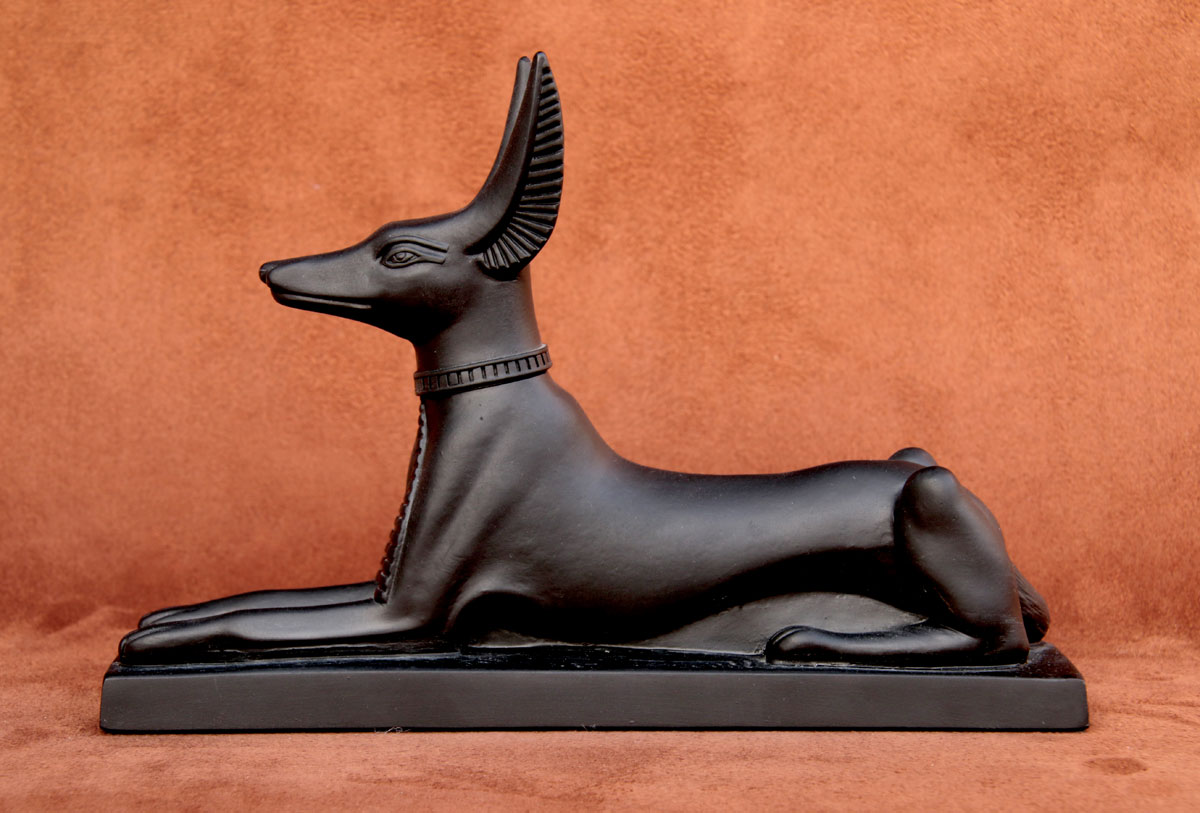
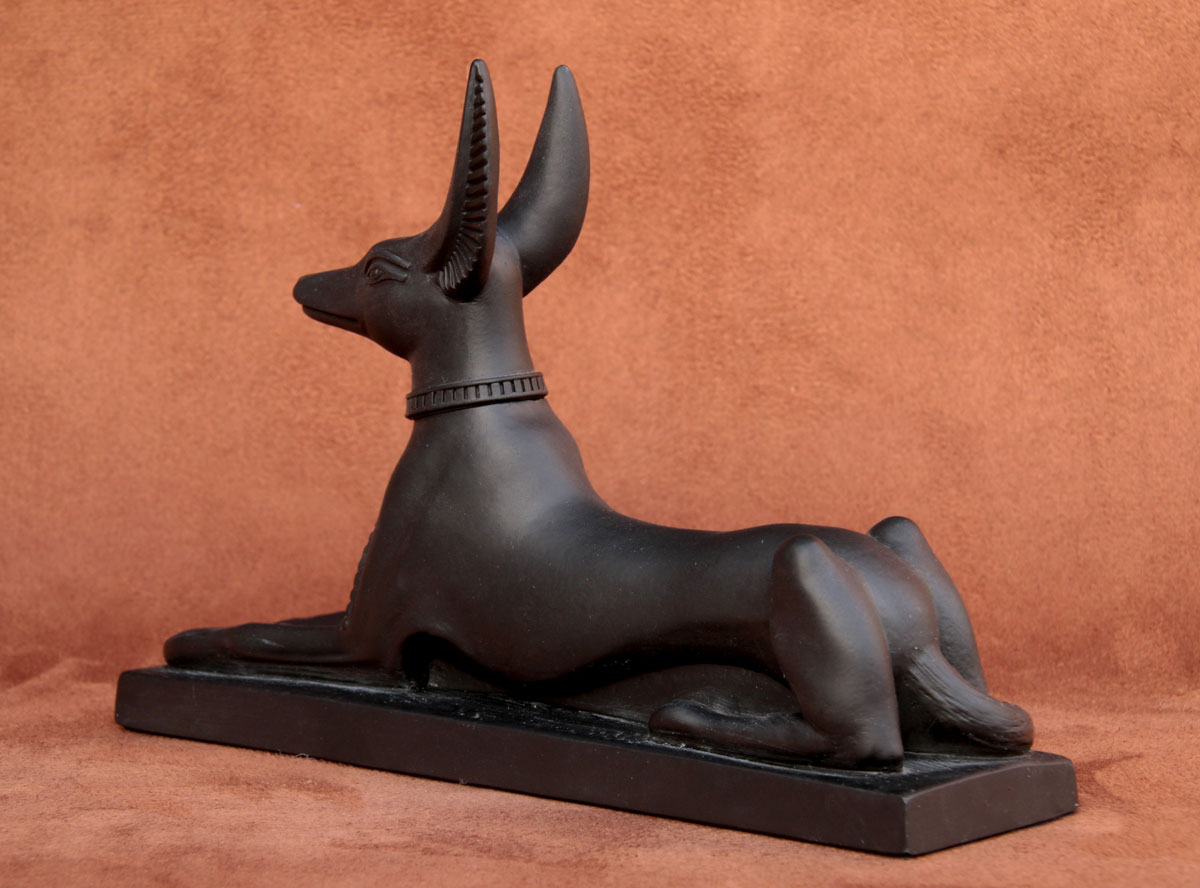
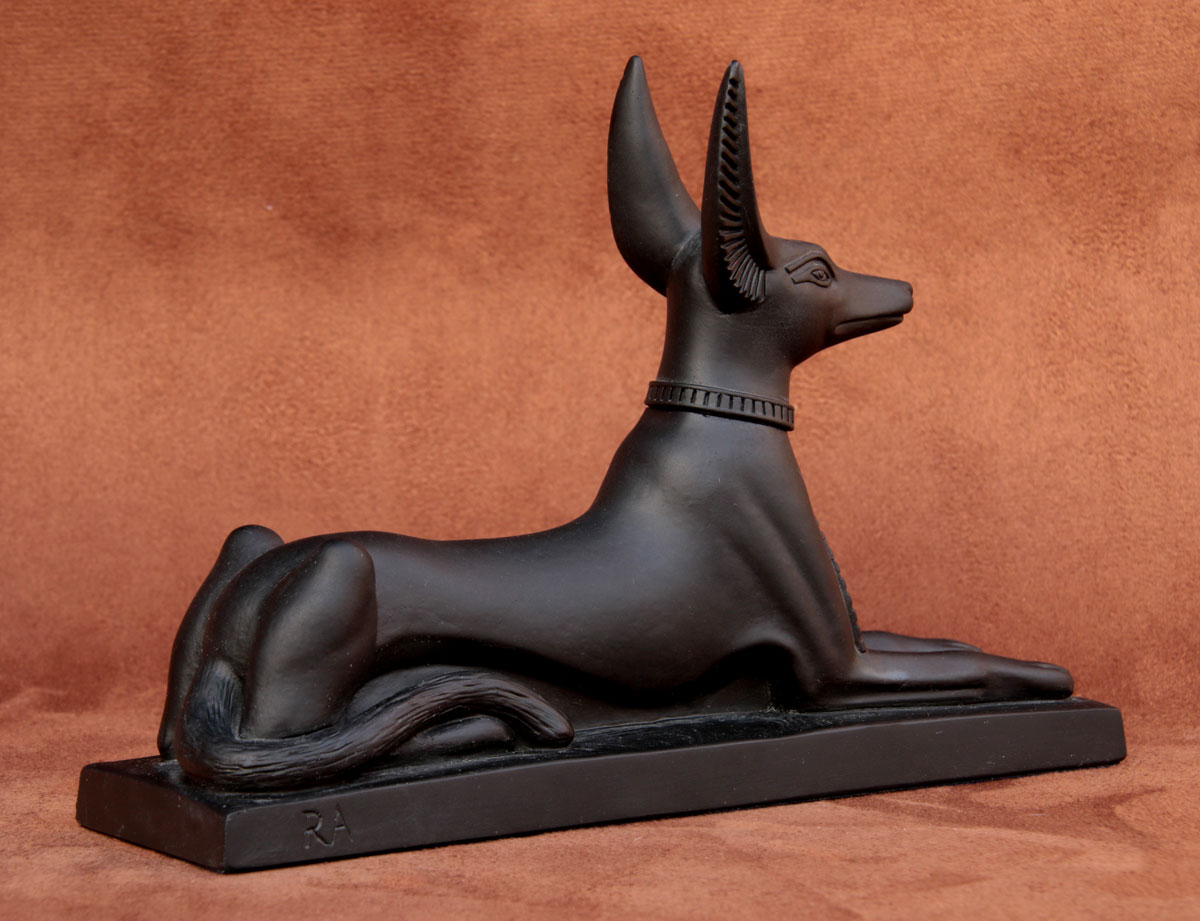
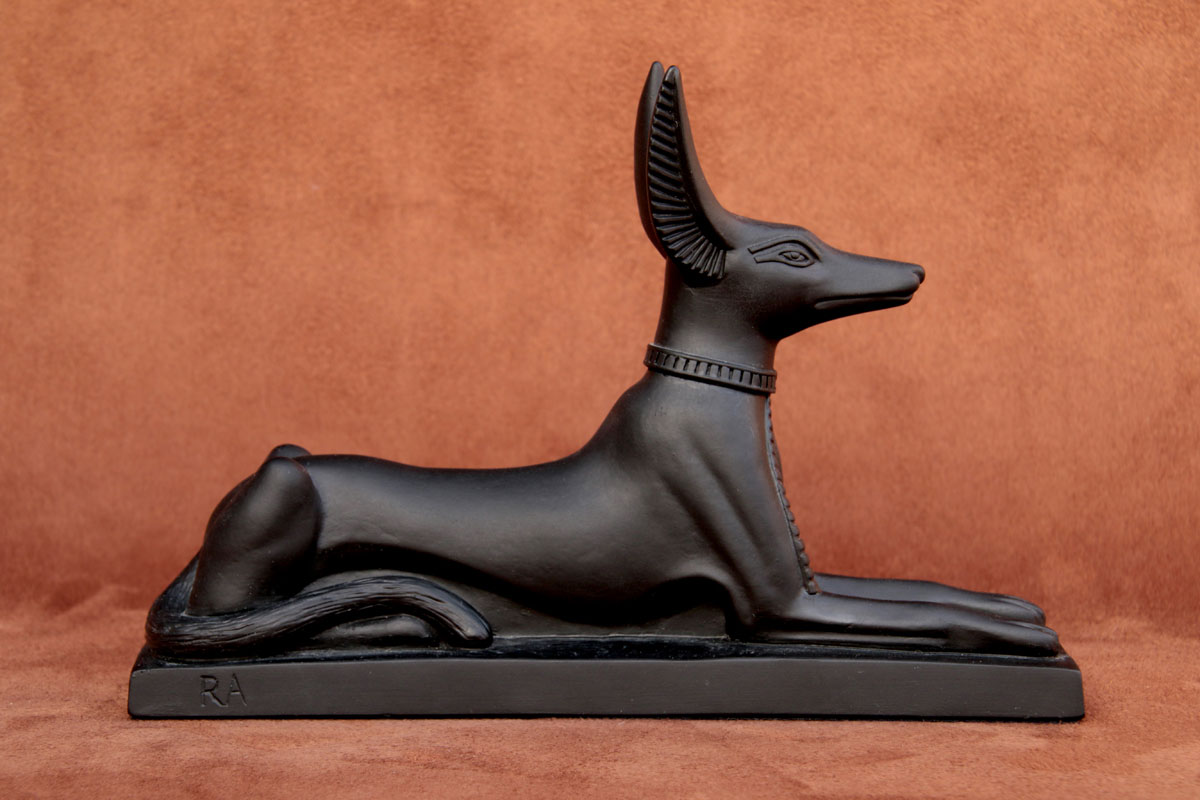
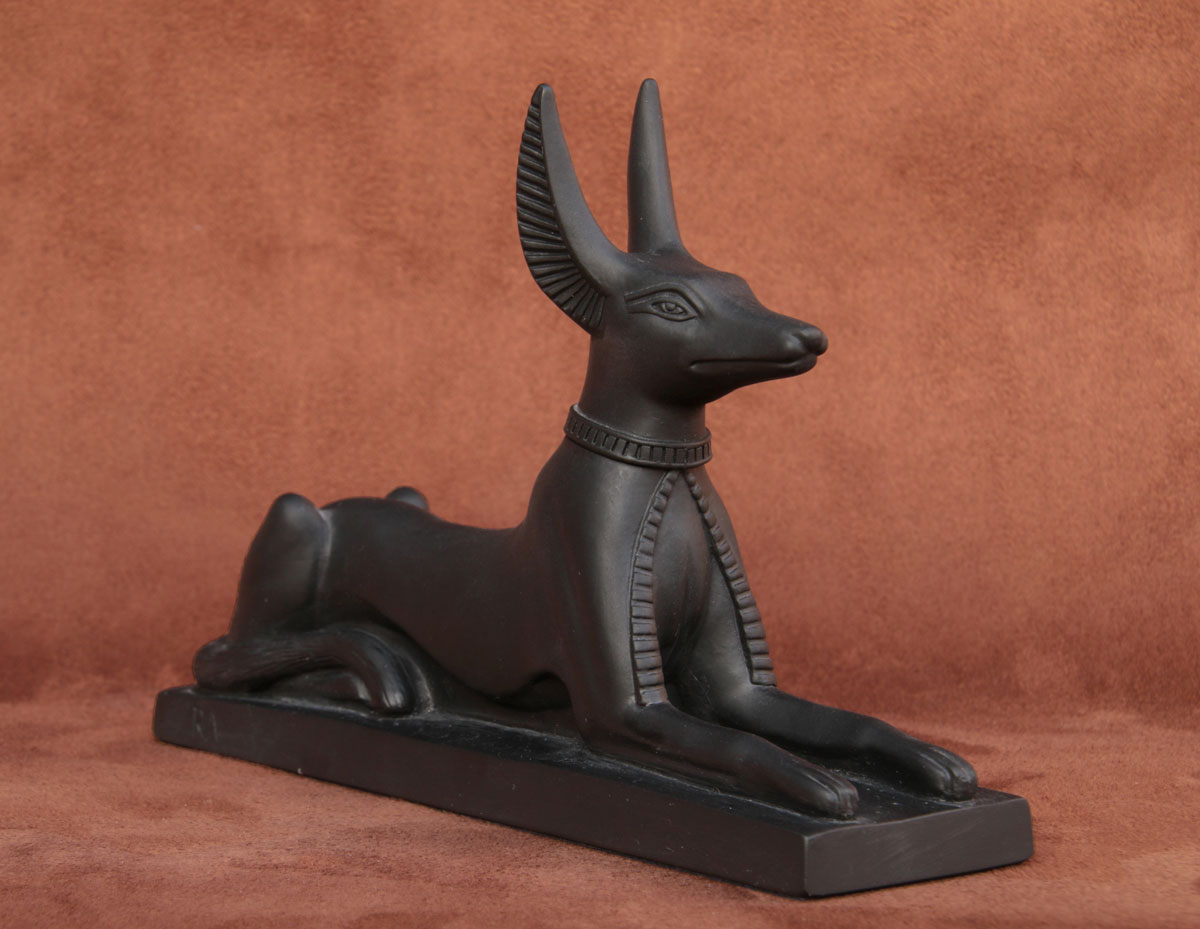
Anubis (Black)
Guardian of the underworld, was the original Ancient Egyptian God of the dead (a role later associated with Osiris), and is usually portrayed as a man with the head of a jackal. This sculpture is based on the one found in the tomb of Tutankhamun, and is unusual in that it depicts Anubis as a full jackal.
More Info
Anubis had many tasks to perform such as watching over the mummification process to ensure that all is done properly and conducting the souls through the underworld, and testing their knowledge of the gods and their faith.
He would also place the heart of the deceased on the Scales of Justice during the Judging of the Heart, to determine the worthiness of the individual to enter the realm of the dead.
In Ancient Egypt, wild dogs and jackals are said to have scavenged and patrolled the peripheries of the deserts, and it is thought that the first tombs were constructed to protect the burial sites of the dead. For the Ancient Egyptians, the colour black was closely associated with fertility.
It is thought that the portrayal of Anubis as black in colour as opposed to the natural brown colour of a Jackals hide, signifies themes of rebirth and the afterlife.
Height: 235mm
Width: 85mm
Depth: 305mm
He would also place the heart of the deceased on the Scales of Justice during the Judging of the Heart, to determine the worthiness of the individual to enter the realm of the dead.
In Ancient Egypt, wild dogs and jackals are said to have scavenged and patrolled the peripheries of the deserts, and it is thought that the first tombs were constructed to protect the burial sites of the dead. For the Ancient Egyptians, the colour black was closely associated with fertility.
It is thought that the portrayal of Anubis as black in colour as opposed to the natural brown colour of a Jackals hide, signifies themes of rebirth and the afterlife.
Height: 235mm
Width: 85mm
Depth: 305mm
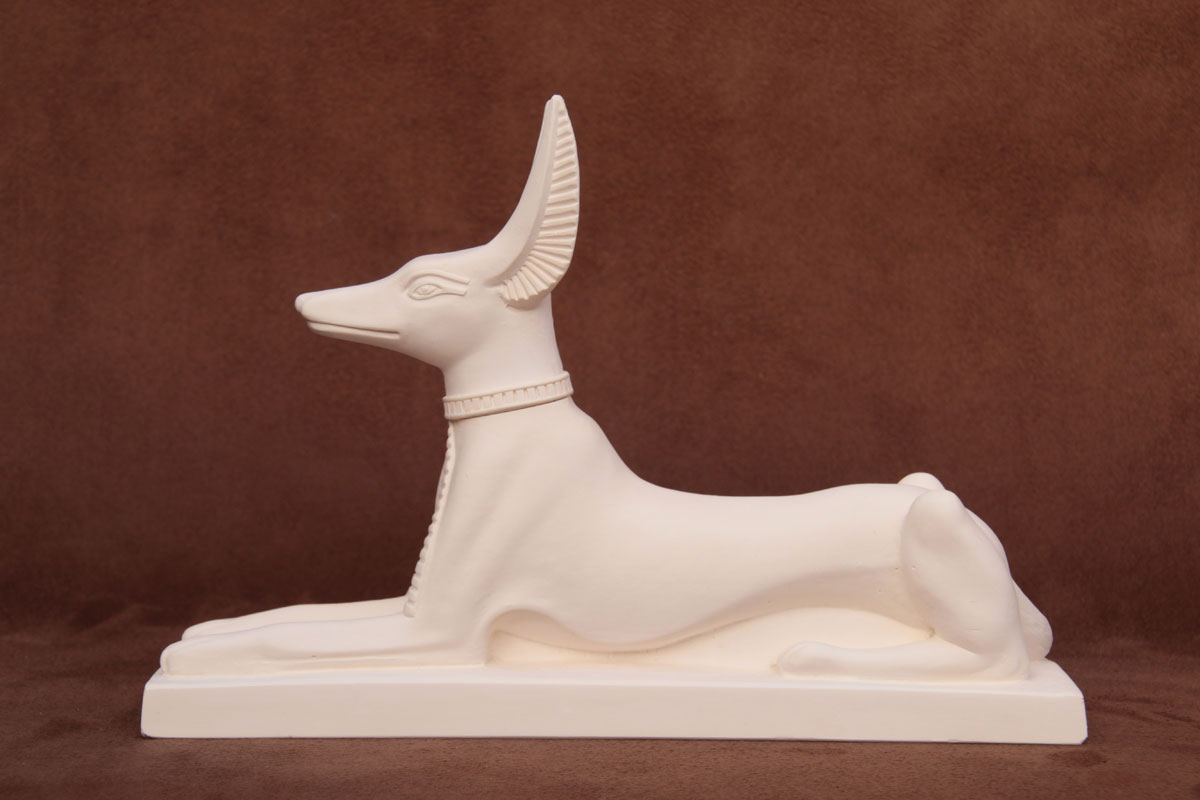
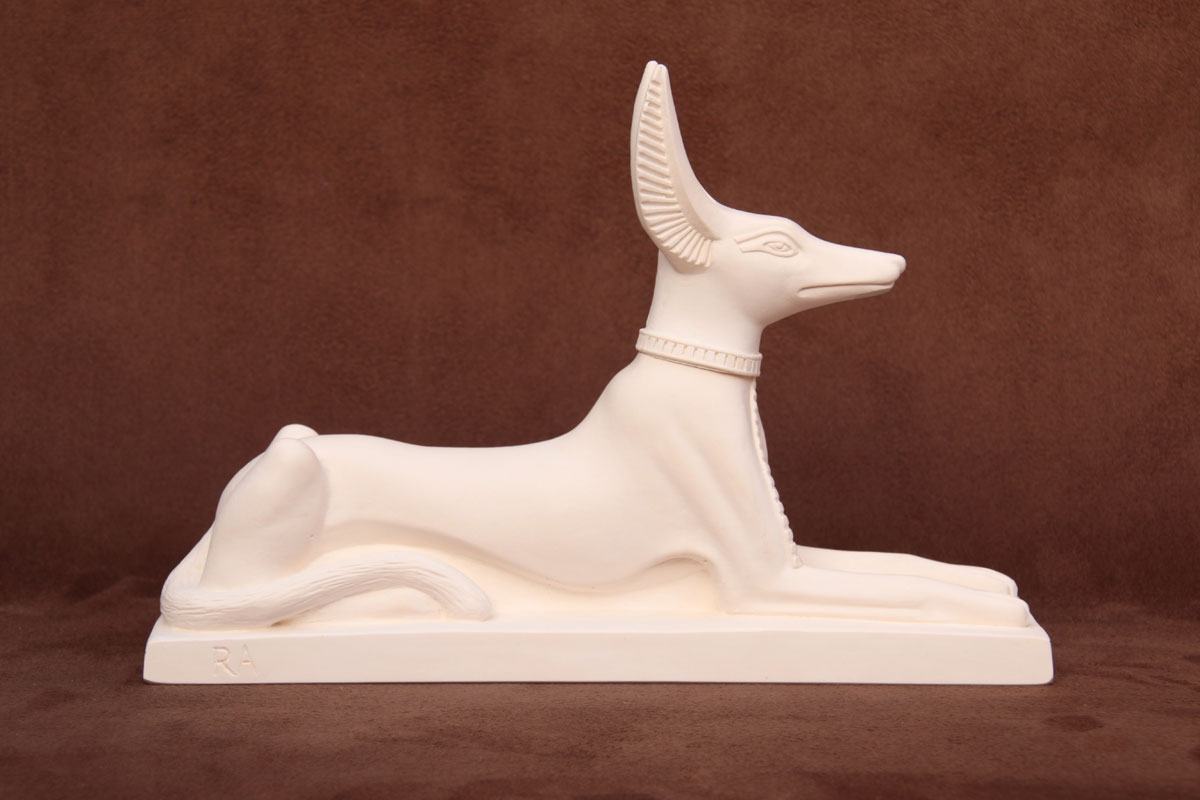
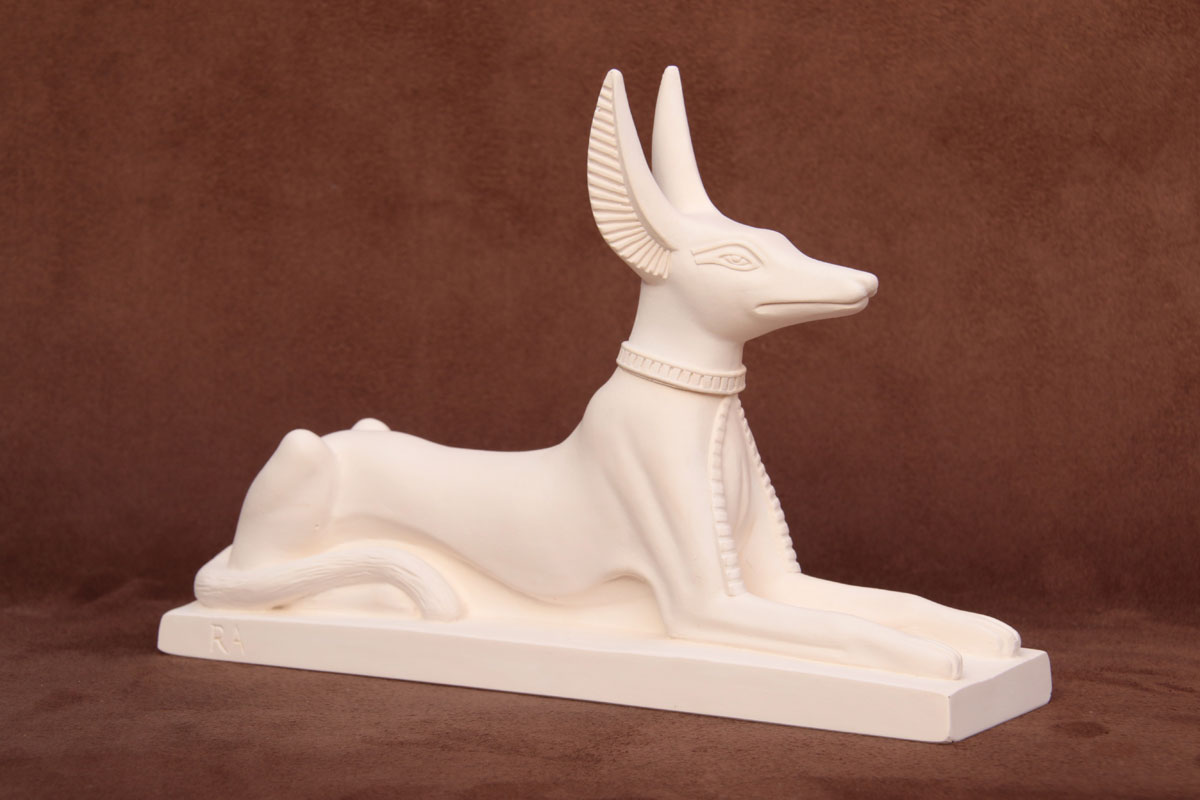
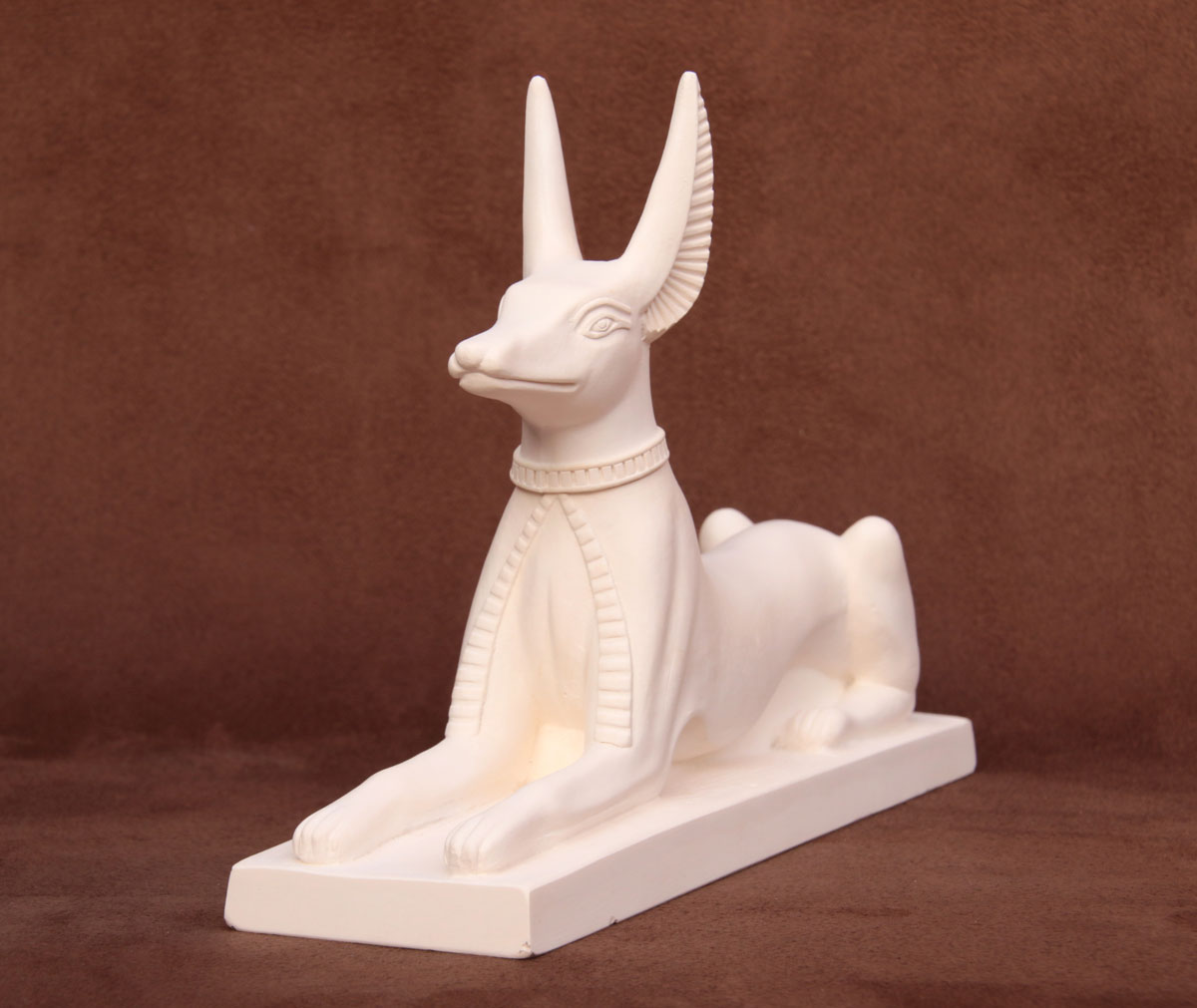
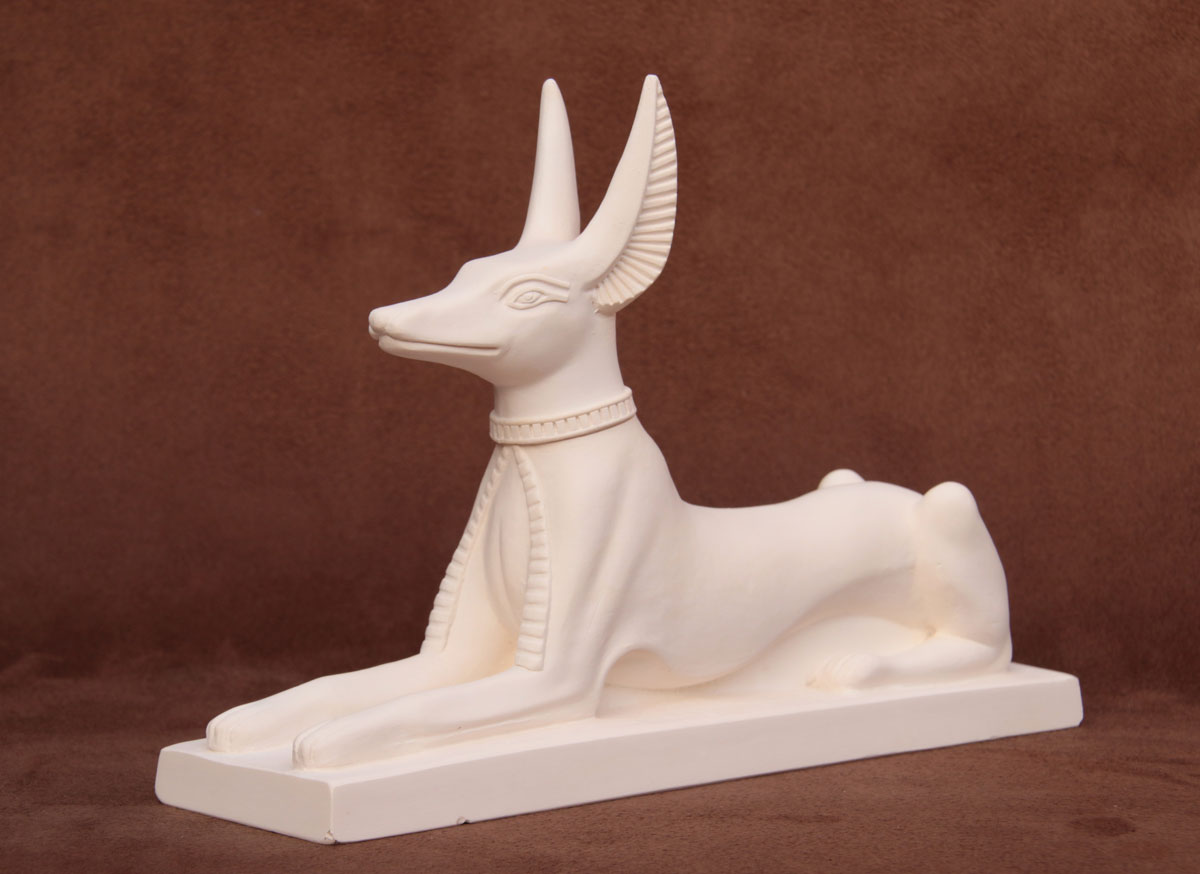
Anubis (White)
Guardian of the underworld, was the original Ancient Egyptian God of the dead (a role later associated with Osiris), and is usually portrayed as a man with the head of a jackal. This sculpture is based on the one found in the tomb of Tutankhamun, and is unusual in that it depicts Anubis as a full jackal.
More Info
Anubis had many tasks to perform such as watching over the mummification process to ensure that all is done properly and conducting the souls through the underworld, and testing their knowledge of the gods and their faith.
He would also place the heart of the deceased on the Scales of Justice during the Judging of the Heart, to determine the worthiness of the individual to enter the realm of the dead.
In Ancient Egypt, wild dogs and jackals are said to have scavenged and patrolled the peripheries of the deserts, and it is thought that the first tombs were constructed to protect the burial sites of the dead. For the Ancient Egyptians, the colour black was closely associated with fertility.
It is thought that the portrayal of Anubis as black in colour as opposed to the natural brown colour of a Jackals hide, signifies themes of rebirth and the afterlife.
Height: 235mm
Width: 85mm
Depth: 305mm
He would also place the heart of the deceased on the Scales of Justice during the Judging of the Heart, to determine the worthiness of the individual to enter the realm of the dead.
In Ancient Egypt, wild dogs and jackals are said to have scavenged and patrolled the peripheries of the deserts, and it is thought that the first tombs were constructed to protect the burial sites of the dead. For the Ancient Egyptians, the colour black was closely associated with fertility.
It is thought that the portrayal of Anubis as black in colour as opposed to the natural brown colour of a Jackals hide, signifies themes of rebirth and the afterlife.
Height: 235mm
Width: 85mm
Depth: 305mm
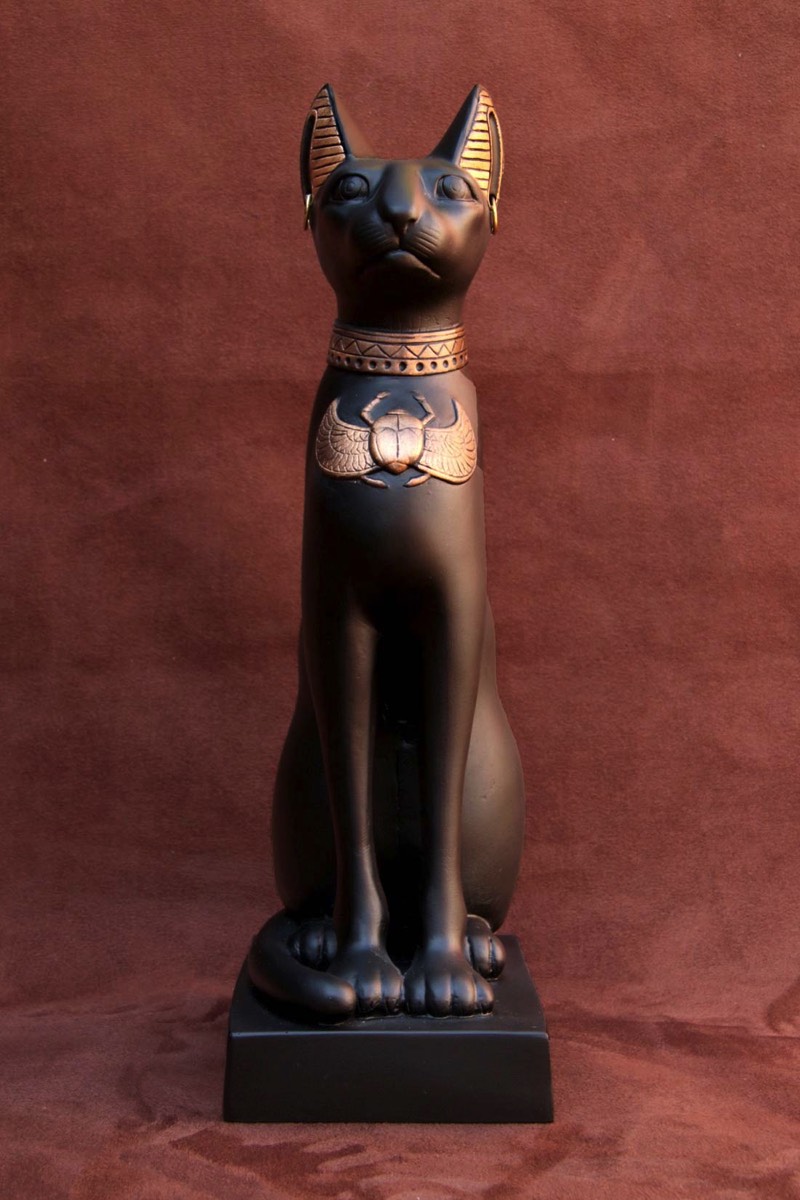
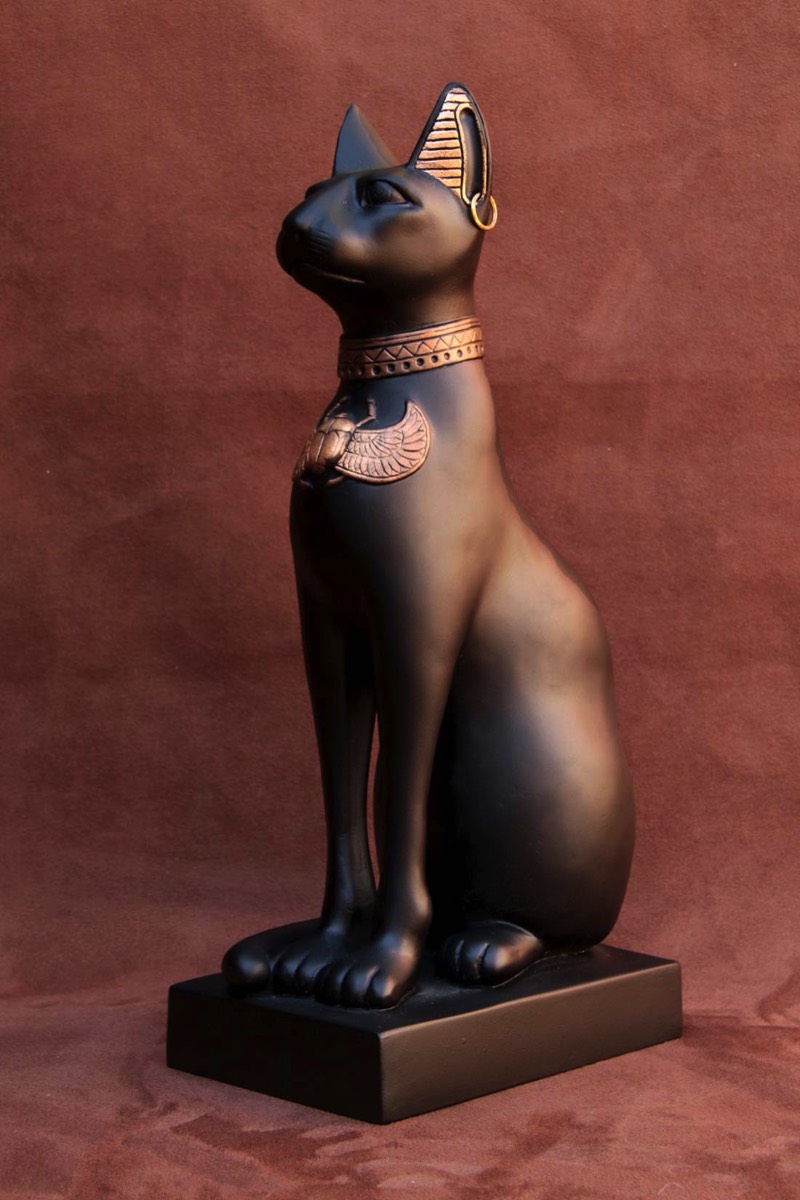
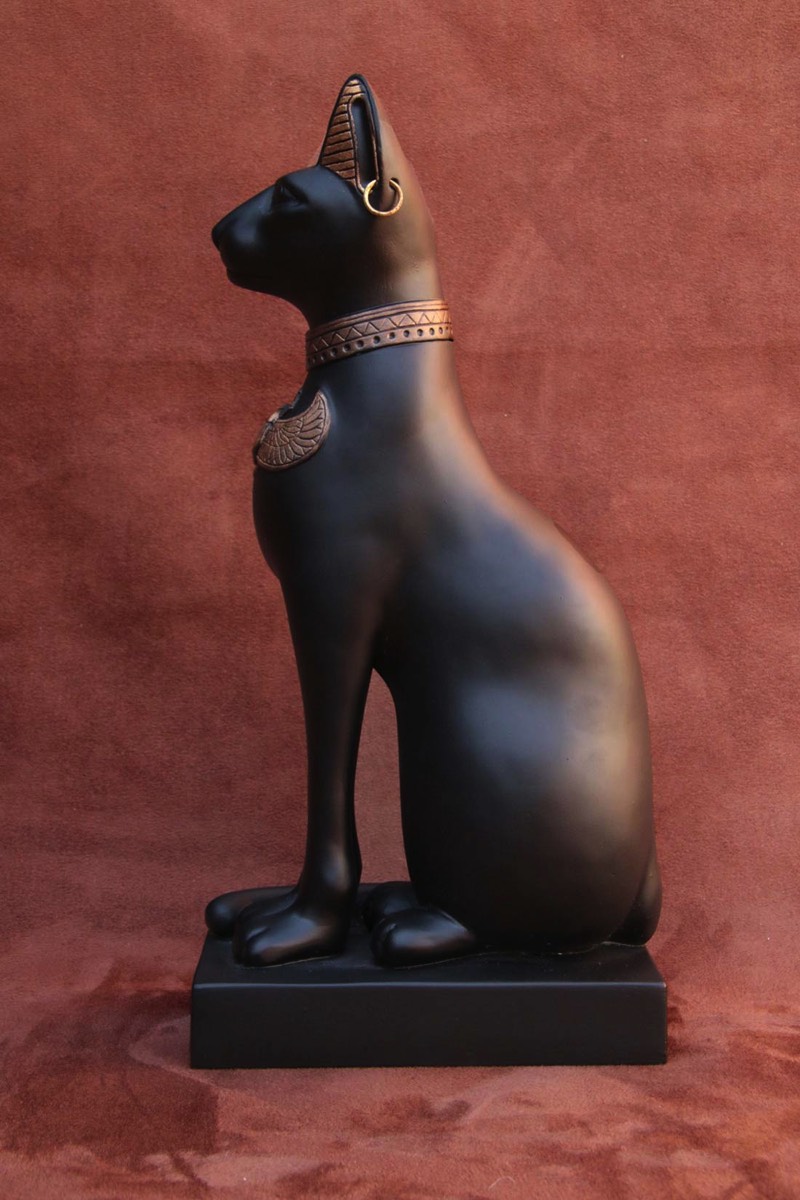
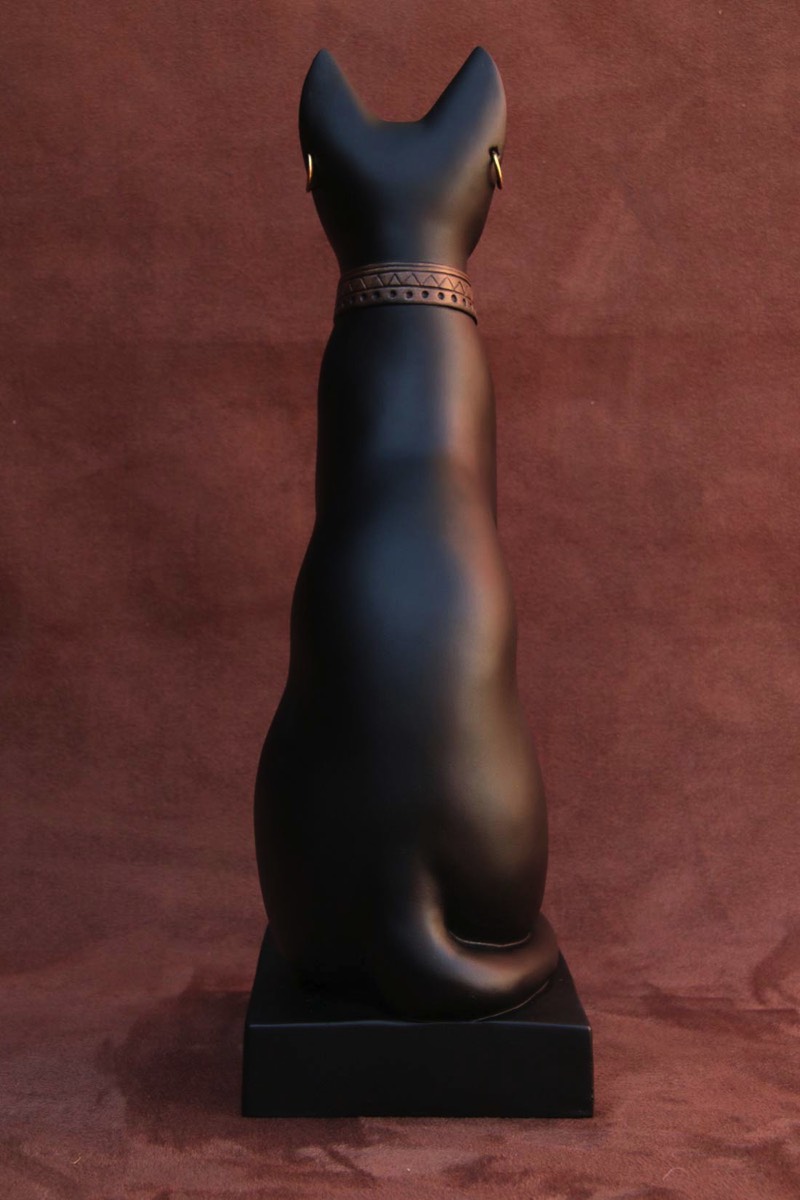
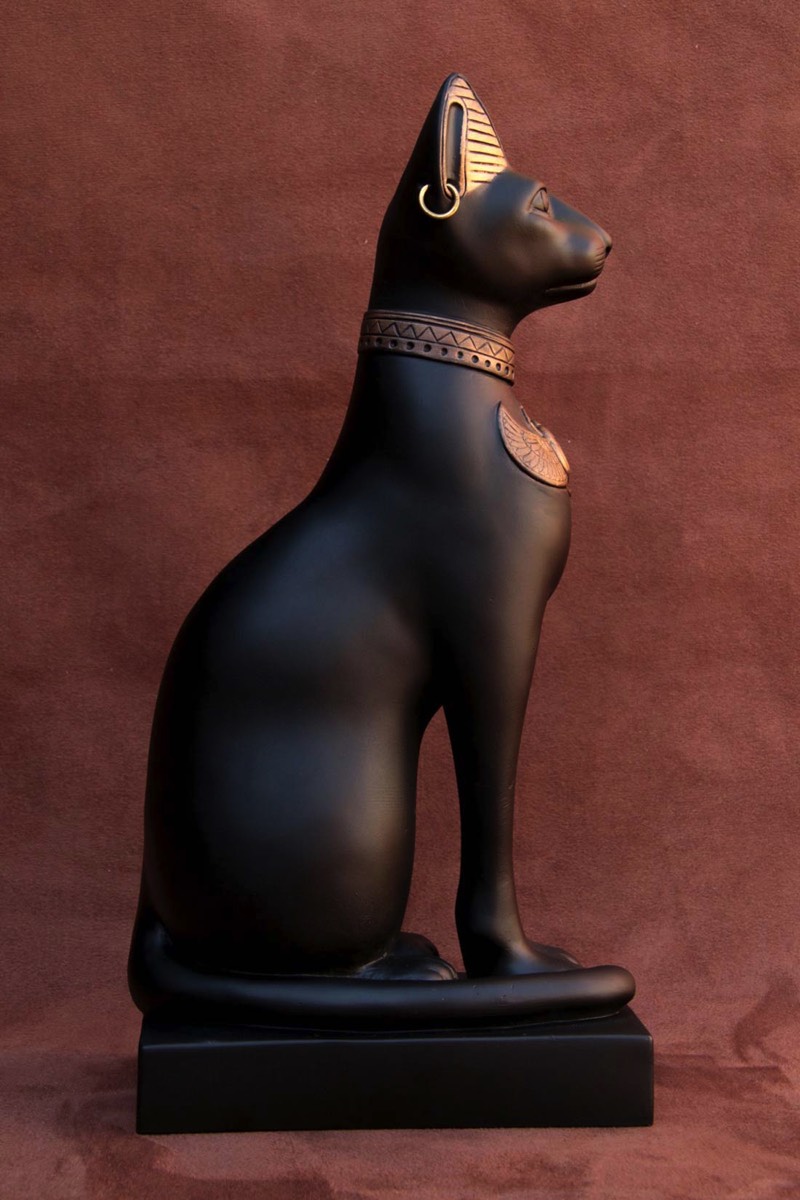
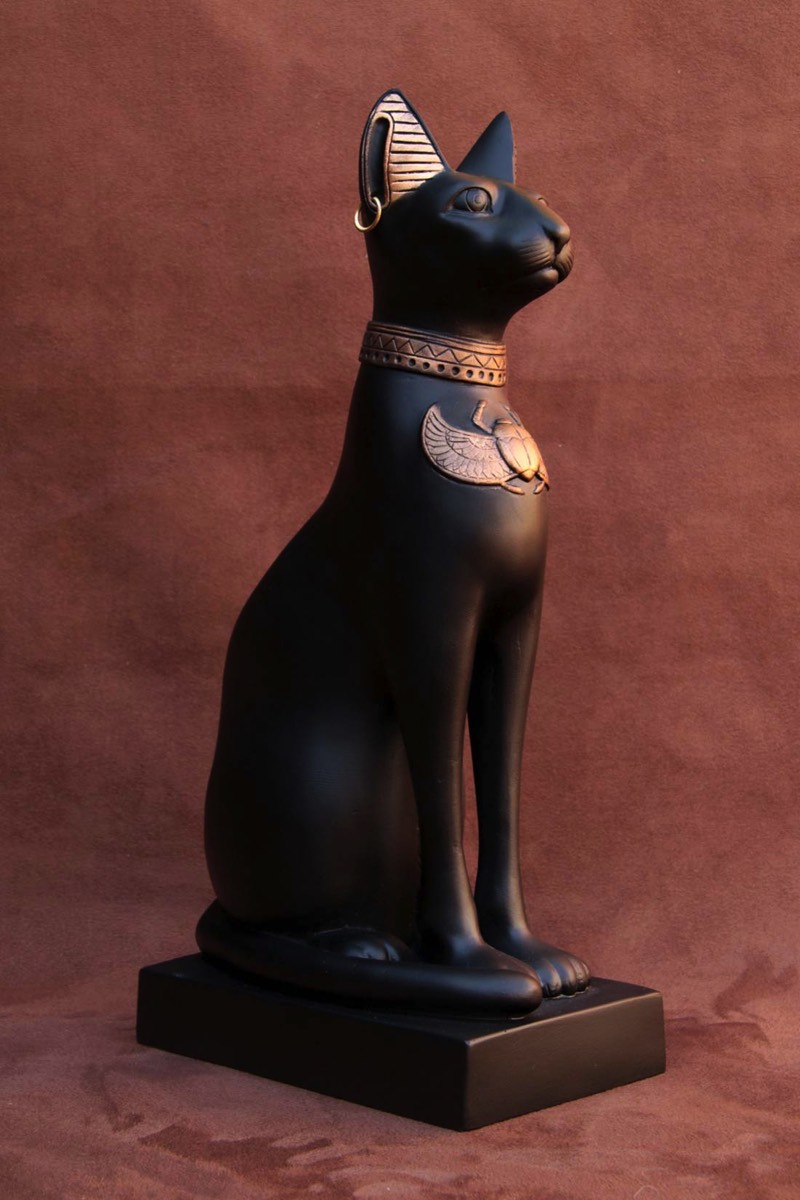
Egyptian Cat Goddess Bast / Black with Gold
Sacred to the Ancient Egyptians, cats were the special attribute of the goddess Bast (Bastet) and were originally depicted as fiercely protective lions.
Gradually, this image softened and the goddess Bastet was often depicted as having the body of a woman and the head of a domestic cat. She was perceived as a gentle, protective goddess.
More Info
Bastet became a household goddess and a protector of women, children and domestic cats. She was also the goddess of sunrise, music, dance, pleasure, as well as family, fertility and birth.
Bastet was one of the daughters of the sun god, Ra. A great temple was built in her honour at Bubastis in the Delta.
Available in dimensions:
(H) 360 x (W) 110 x (D) 170 mm
Bastet was one of the daughters of the sun god, Ra. A great temple was built in her honour at Bubastis in the Delta.
Available in dimensions:
(H) 360 x (W) 110 x (D) 170 mm
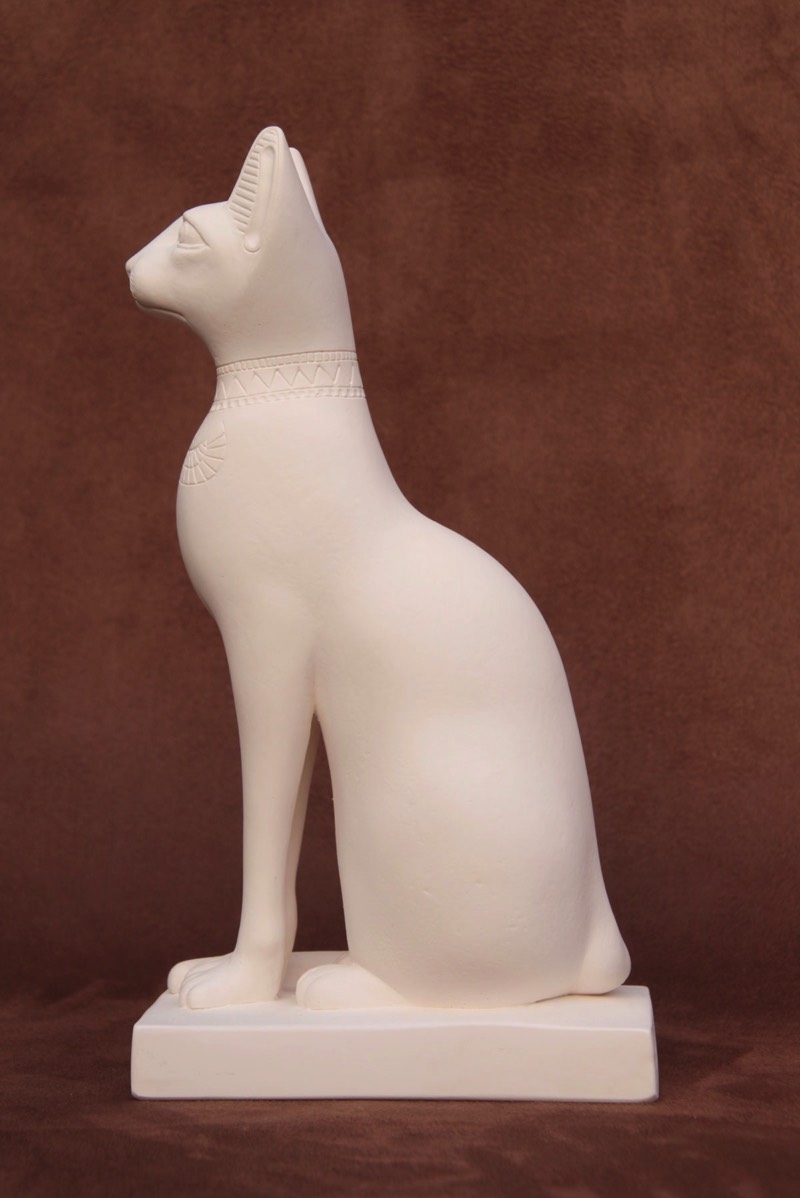
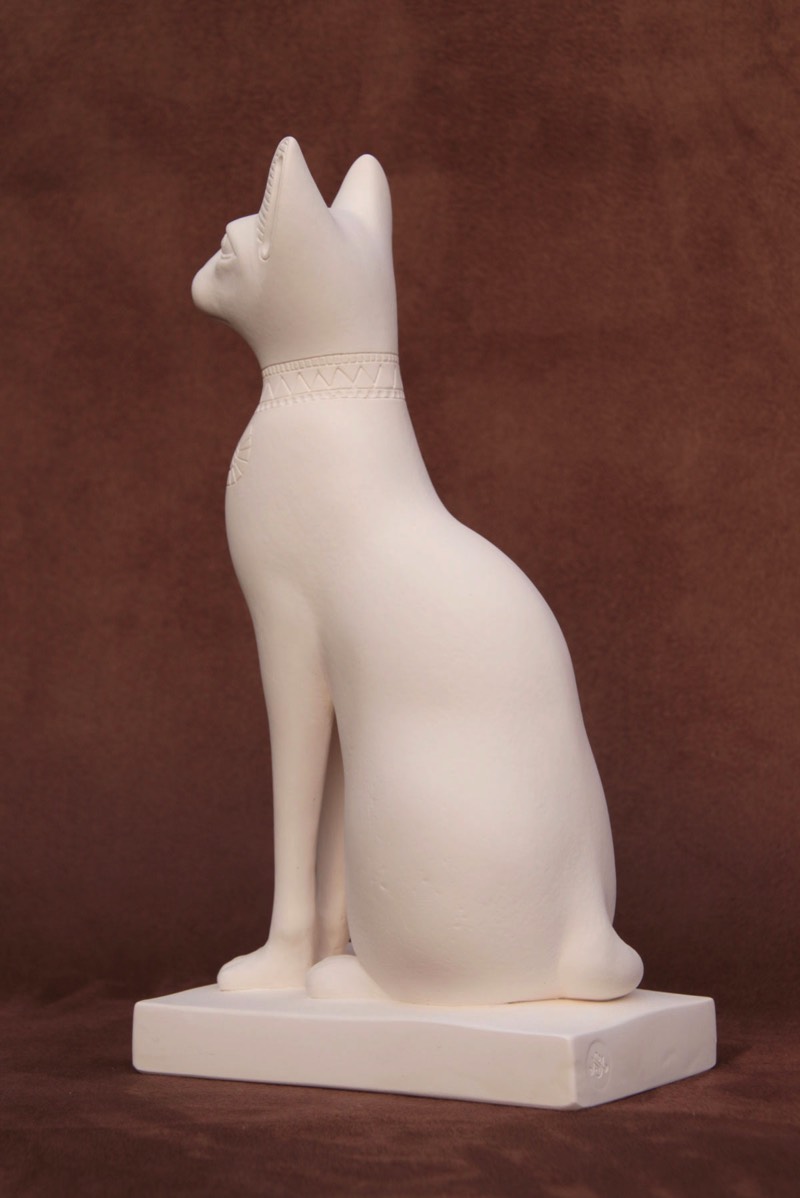
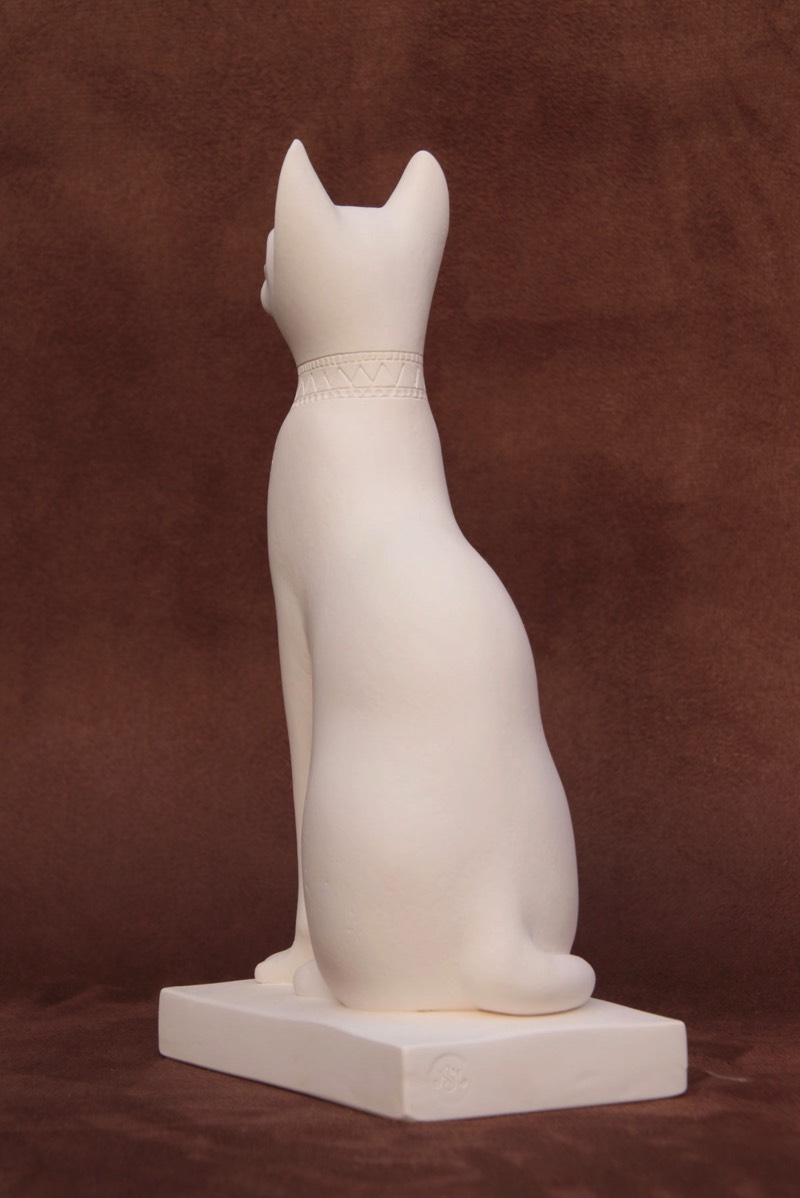
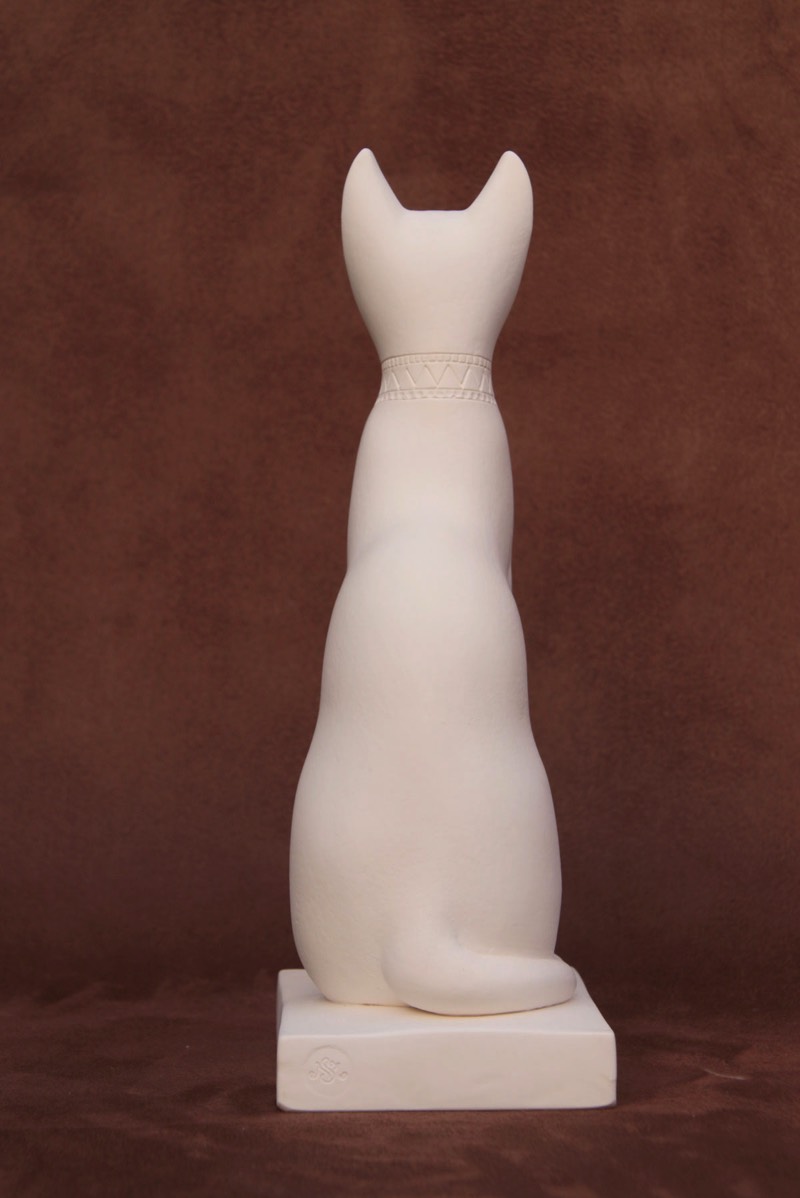
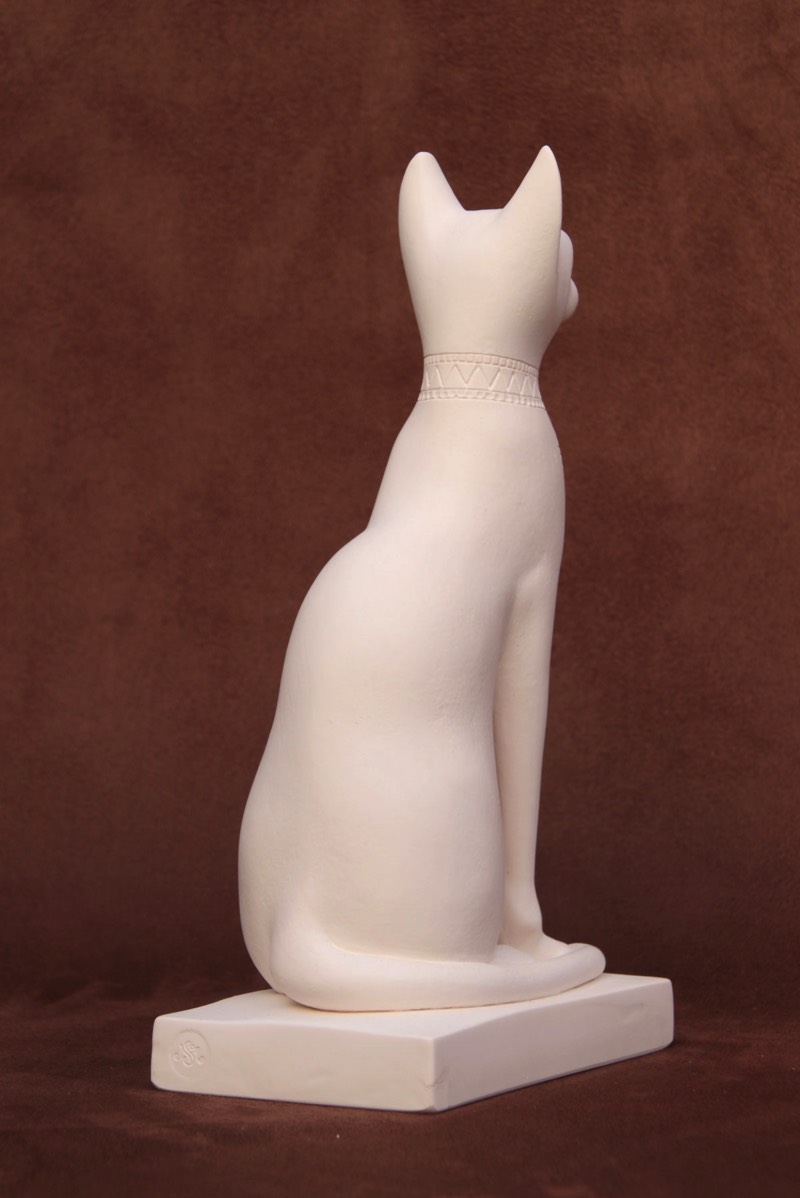
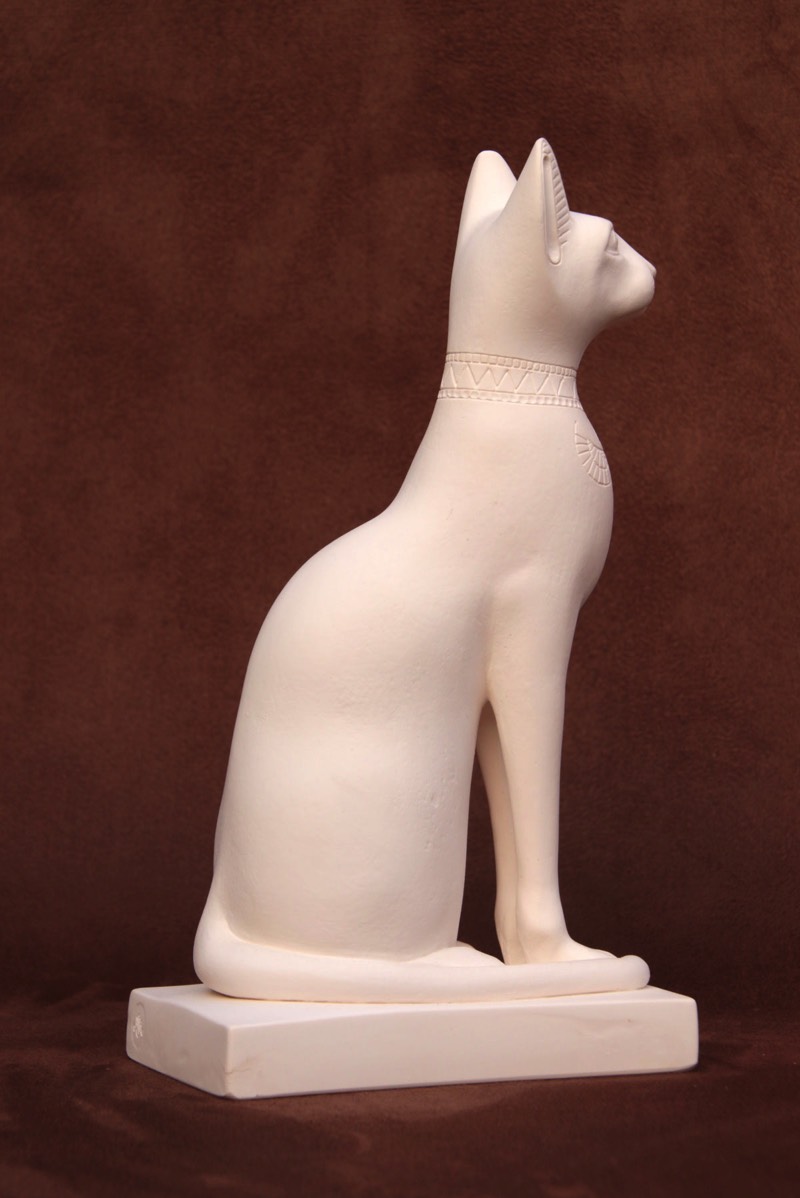
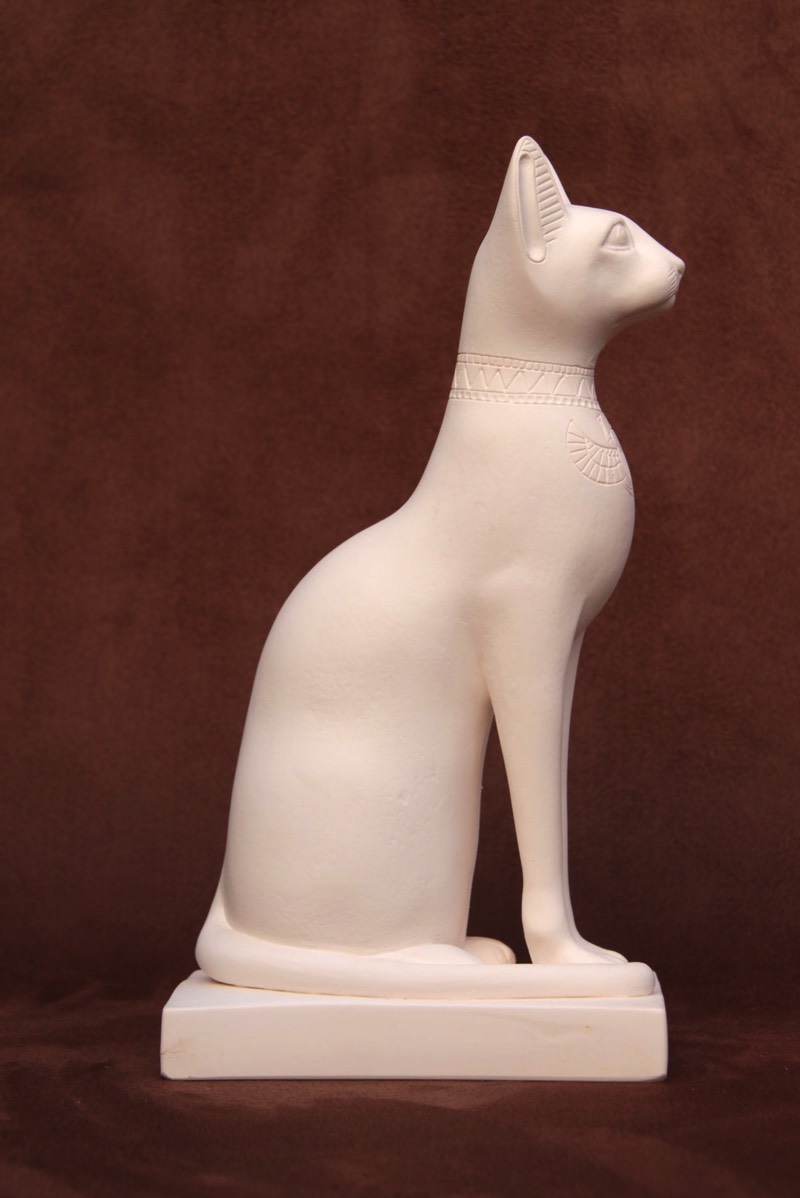
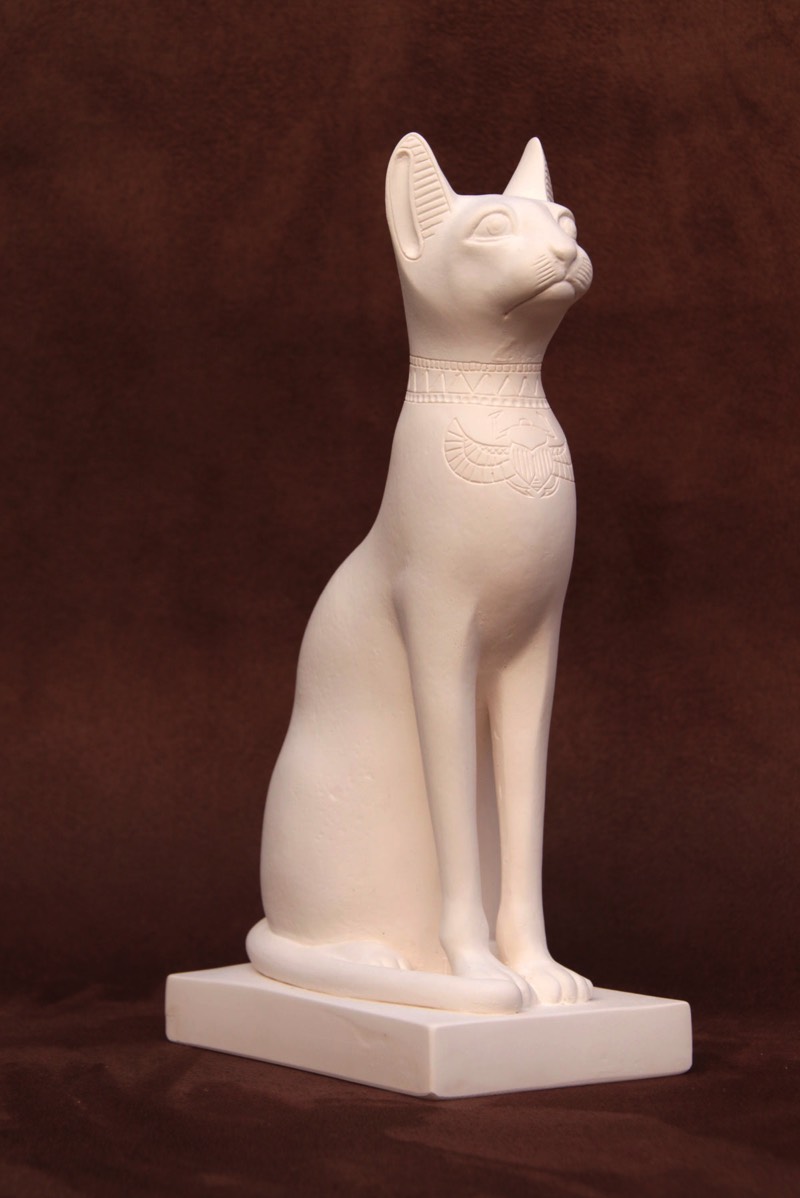
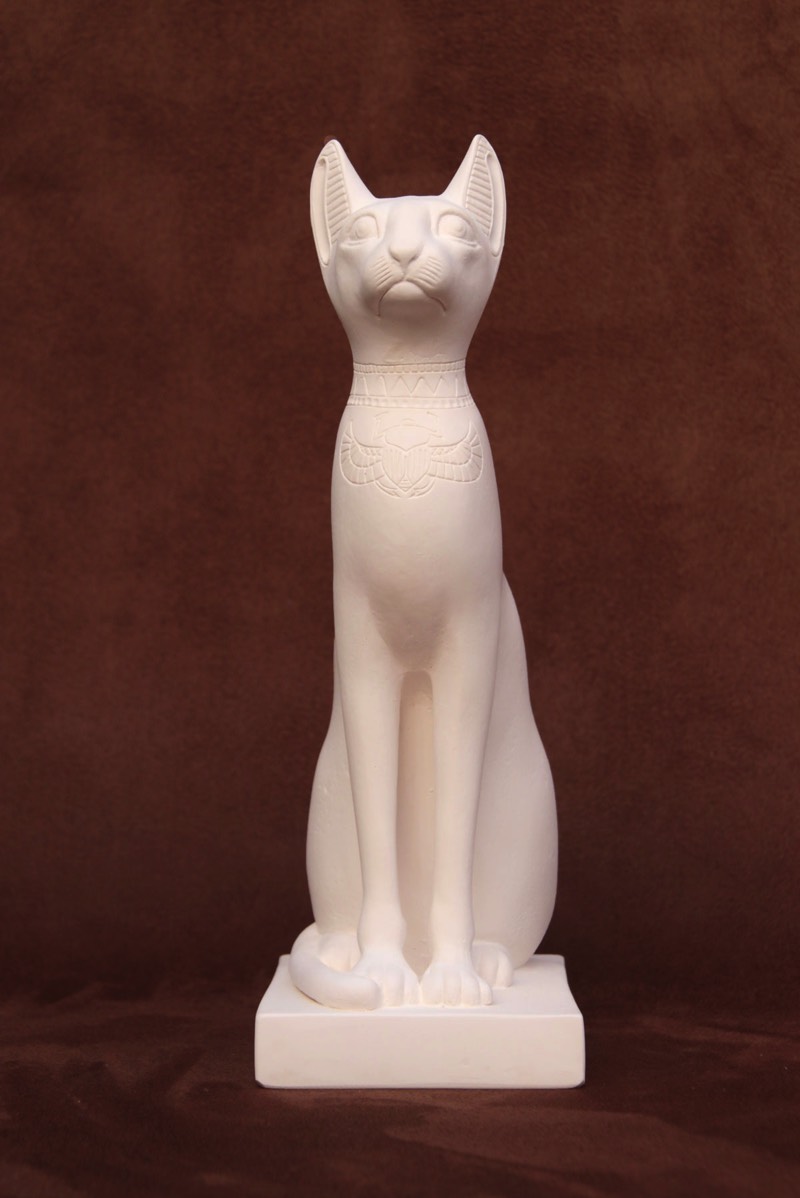
Egyptian Cat Goddess Bast / White
Sacred to the Ancient Egyptians, cats were the special attribute of the goddess Bast (Bastet) and were originally depicted as fiercely protective lions.
Gradually, this image softened and the goddess Bastet was often depicted as having the body of a woman and the head of a domestic cat. She was perceived as a gentle, protective goddess.
More Info
Bastet became a household goddess and a protector of women, children and domestic cats. She was also the goddess of sunrise, music, dance, pleasure, as well as family, fertility and birth.
Bastet was one of the daughters of the sun god, Ra. A great temple was built in her honour at Bubastis in the Delta.
Available in dimensions:
(H) 95 x (W) 35 x (D) 45 mm
(H) 210 x (W) 70 x (D) 110 mm
(H) 360 x (W) 110 x (D) 170 mm
Bastet was one of the daughters of the sun god, Ra. A great temple was built in her honour at Bubastis in the Delta.
Available in dimensions:
(H) 95 x (W) 35 x (D) 45 mm
(H) 210 x (W) 70 x (D) 110 mm
(H) 360 x (W) 110 x (D) 170 mm
Egyptian Plaques
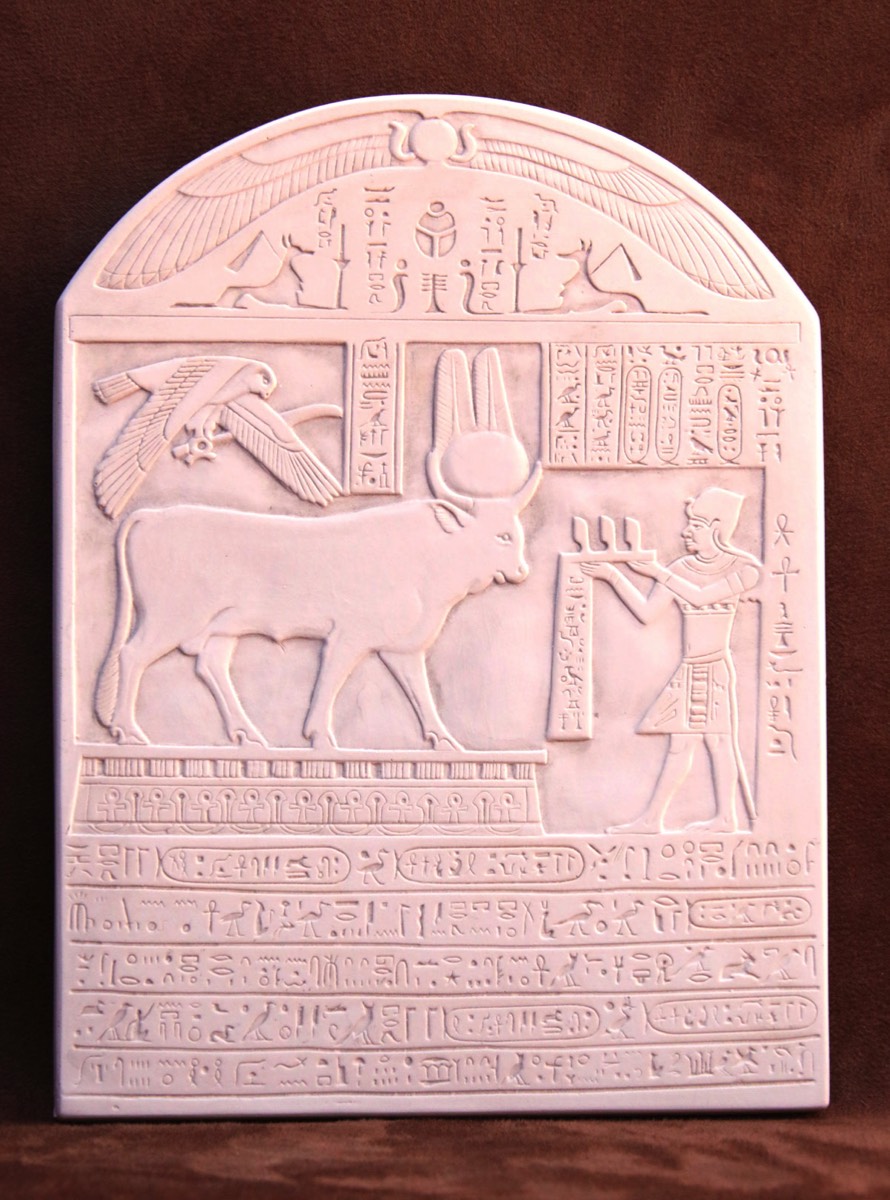
Apis the Bull (Egyptian Plaque in plaster)
The original can be viewed at the British Museum being a round-topped sandstone stela divided into three registers:
1 - Winged sun-disc with pendent crowned uraei and jackals with flails below.
2 - Scene of Ptolemy II wearing the double crown offering to the Buchis Bull.
3 - Four lines of Hieroglyphic text recording the death of the sacred Buchis bull.
More Info
He presents an offering tray with three bread loaves shaped like reed leaves, one of which is damaged. An incense burner stands before the bull, who wears a sun-disc with double-plumes, and a stands on a platform.
Above the incense burner is a column intended for text, but no trace of inscription is evident and it may have been left blank. On the left, over the figure of the bull, is a second winged sun-disc, smaller and with unusually positioned wings, more often seen on hovering Horus falcons.
Despite the rather poor quality of the stone, the musculature of the king’s knees and the bull’s legs are indicated, and their faces are relatively modelled. The king’s face is somewhat rounded and fleshy. The stela is chipped around the edges.
Height: 210mm
Width: 155mm
Depth: 15mm
Above the incense burner is a column intended for text, but no trace of inscription is evident and it may have been left blank. On the left, over the figure of the bull, is a second winged sun-disc, smaller and with unusually positioned wings, more often seen on hovering Horus falcons.
Despite the rather poor quality of the stone, the musculature of the king’s knees and the bull’s legs are indicated, and their faces are relatively modelled. The king’s face is somewhat rounded and fleshy. The stela is chipped around the edges.
Height: 210mm
Width: 155mm
Depth: 15mm
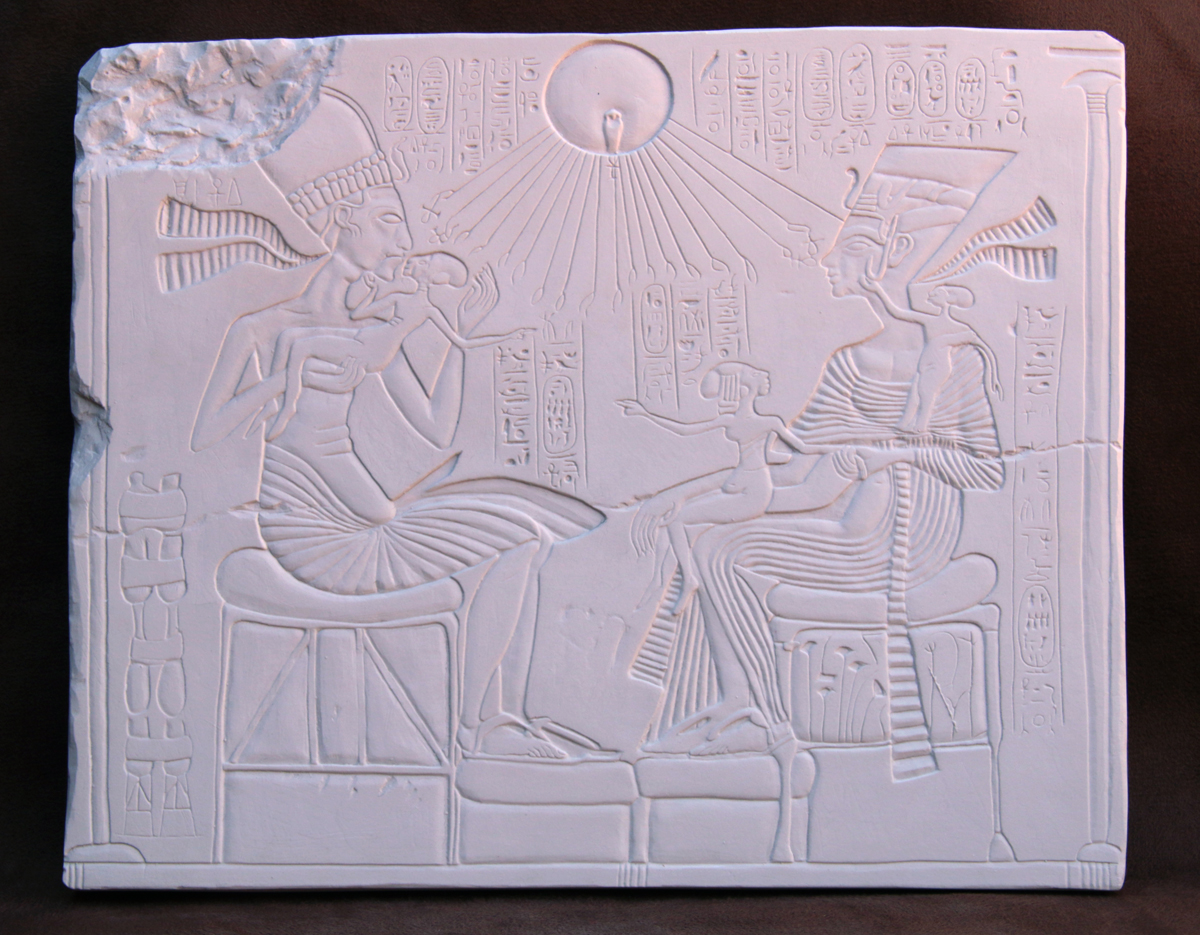
Akhenaten, Nefertiti, and three daughters Plaque
Amarna period, 18th dynasty, c.1350 BCE
More Info
House Altar depicting Akhenaten, Nefertiti and Three of their Daughters, limestone, New Kingdom.
This piece was meant to be a house altar. the iconography of Aten and the depiction of the royal family of Akhenaten was propagated to encourage people to embrace the new monotheistic religion.
Works such as this relief carving were present and central to everyday life; the house altar serves a practical function as well as an artistic one, so the underlying message becomes present and visible in the family's daily life.
Height: 215mm
Width: 255mm
Depth: 15mm
This piece was meant to be a house altar. the iconography of Aten and the depiction of the royal family of Akhenaten was propagated to encourage people to embrace the new monotheistic religion.
Works such as this relief carving were present and central to everyday life; the house altar serves a practical function as well as an artistic one, so the underlying message becomes present and visible in the family's daily life.
Height: 215mm
Width: 255mm
Depth: 15mm
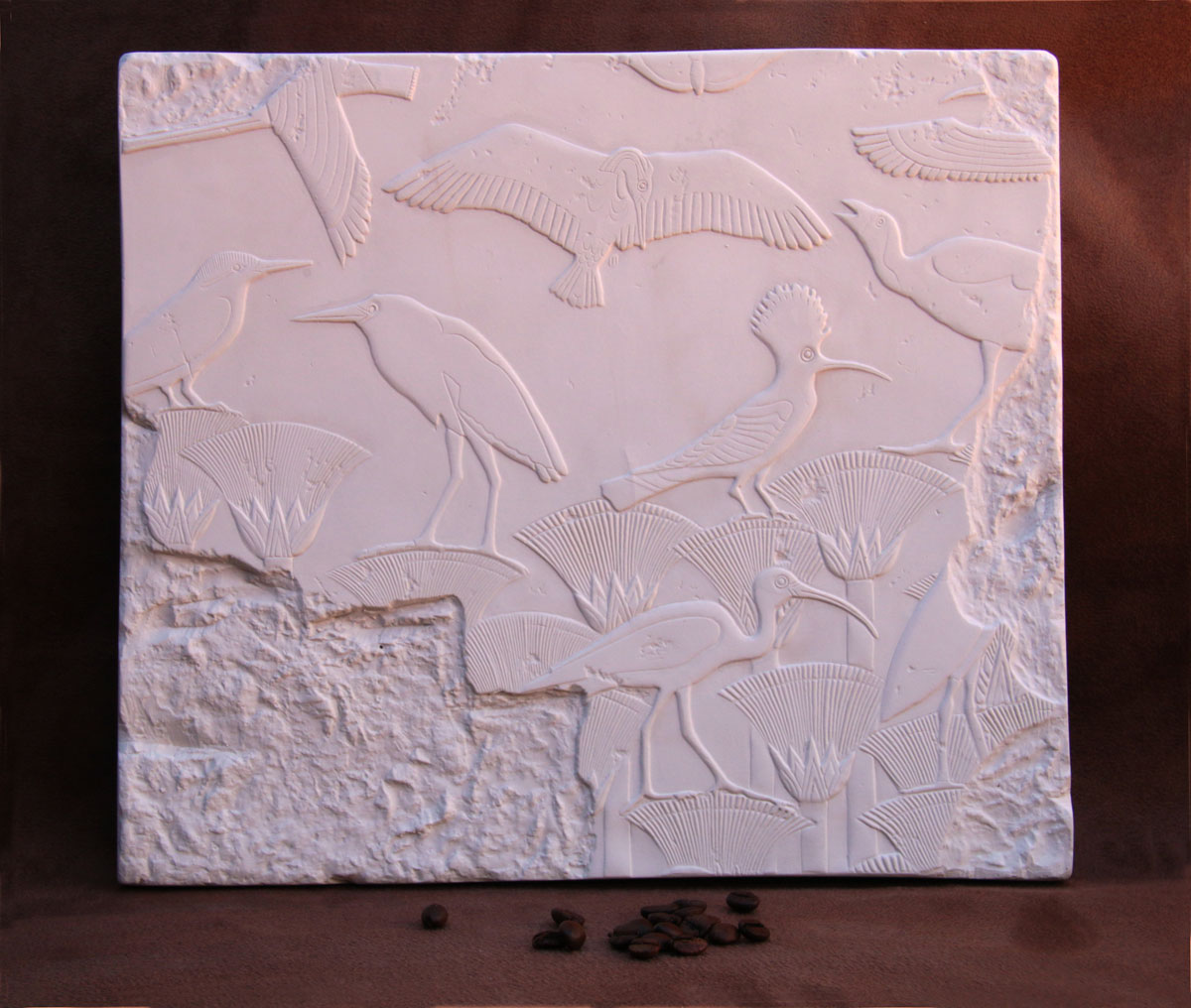
Birds and Papyrus Plaque
Jean-Philippe Lauer (1902 – 2001), was a French architect and prominent Egyptologist.
Jean-Philippe Lauer (1902 – 2001), was a French architect and prominent Egyptologist.
More Info
This limestone relief was unearthed during Lauer's 1948 excavations of the upper temple of the funerary complex of Userkaf, the first king of the 5th Dynasty.
The piece depicts several birds; the pied kingfisher, purple gallinule, the striped hoopoe, the sacred ibis, the night heron and the European kingfisher.
Height: 245mm
Width:280mm
Depth: 186mm
The piece depicts several birds; the pied kingfisher, purple gallinule, the striped hoopoe, the sacred ibis, the night heron and the European kingfisher.
Height: 245mm
Width:280mm
Depth: 186mm
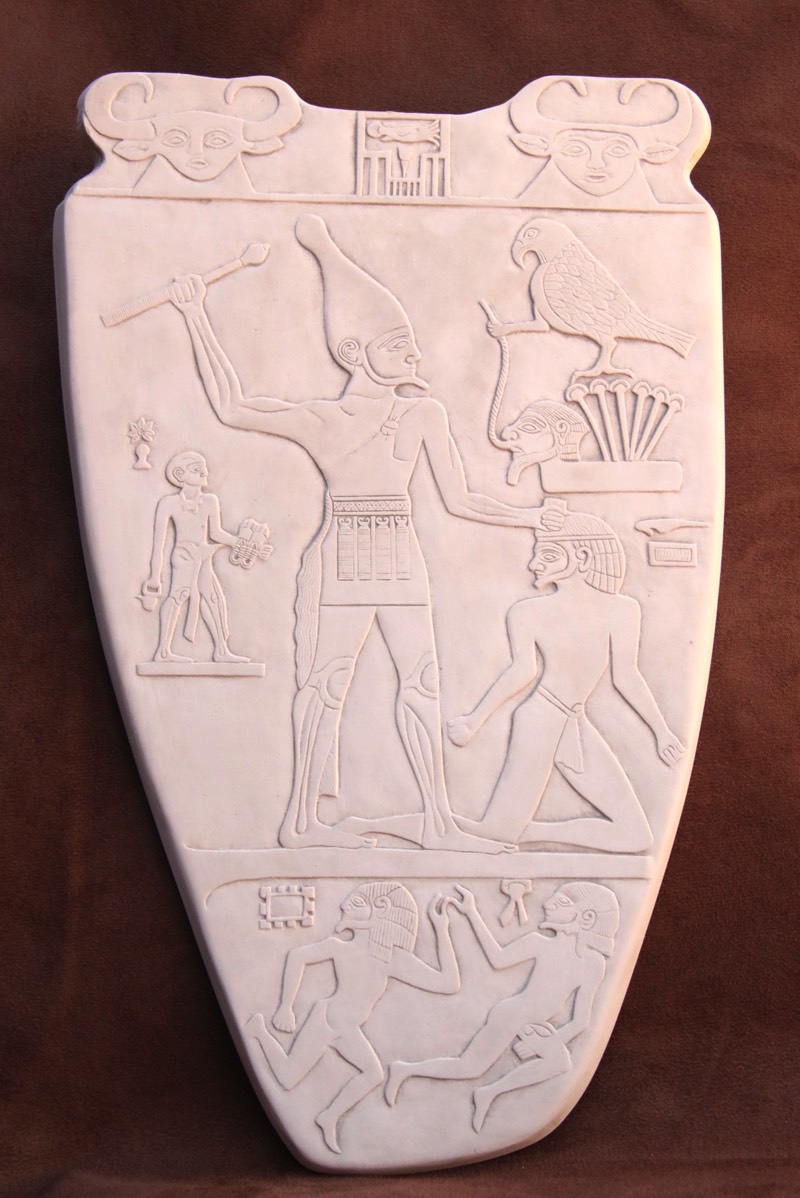
Palette of King Narmer
Some artefacts are of such vital importance to our understanding of ancient cultures that they are truly unique and utterly irreplaceable.
Discovered among a group of sacred implements ritually buried in a deposit within an early temple of the falcon god Horus at the site of Hierakonpolis (the capital of Egypt during the pre-dynastic period), this large ceremonial object is one of the most important artefacts from the dawn of Egyptian civilisation.
Some artefacts are of such vital importance to our understanding of ancient cultures that they are truly unique and utterly irreplaceable.
Discovered among a group of sacred implements ritually buried in a deposit within an early temple of the falcon god Horus at the site of Hierakonpolis (the capital of Egypt during the pre-dynastic period), this large ceremonial object is one of the most important artefacts from the dawn of Egyptian civilisation.
More Info
Discovered among a group of sacred implements ritually buried in a deposit within an early temple of the falcon god Horus at the site of Hierakonpolis (the capital of Egypt during the pre-dynastic period), this large ceremonial object is one of the most important artifacts from the dawn of Egyptian civilization.
The beautifully carved palette, 63.5 cm (more than 2 feet) in height and made of smooth greyish-green siltstone, is decorated on both faces with detailed low relief.
These scenes show a king, identified by name as Narmer, and a series of ambiguous scenes that have been difficult to interpret and have resulted in a number of theories regarding their meaning.
Height: 380mm
Width: 230mm
Depth: 15mm
The beautifully carved palette, 63.5 cm (more than 2 feet) in height and made of smooth greyish-green siltstone, is decorated on both faces with detailed low relief.
These scenes show a king, identified by name as Narmer, and a series of ambiguous scenes that have been difficult to interpret and have resulted in a number of theories regarding their meaning.
Height: 380mm
Width: 230mm
Depth: 15mm